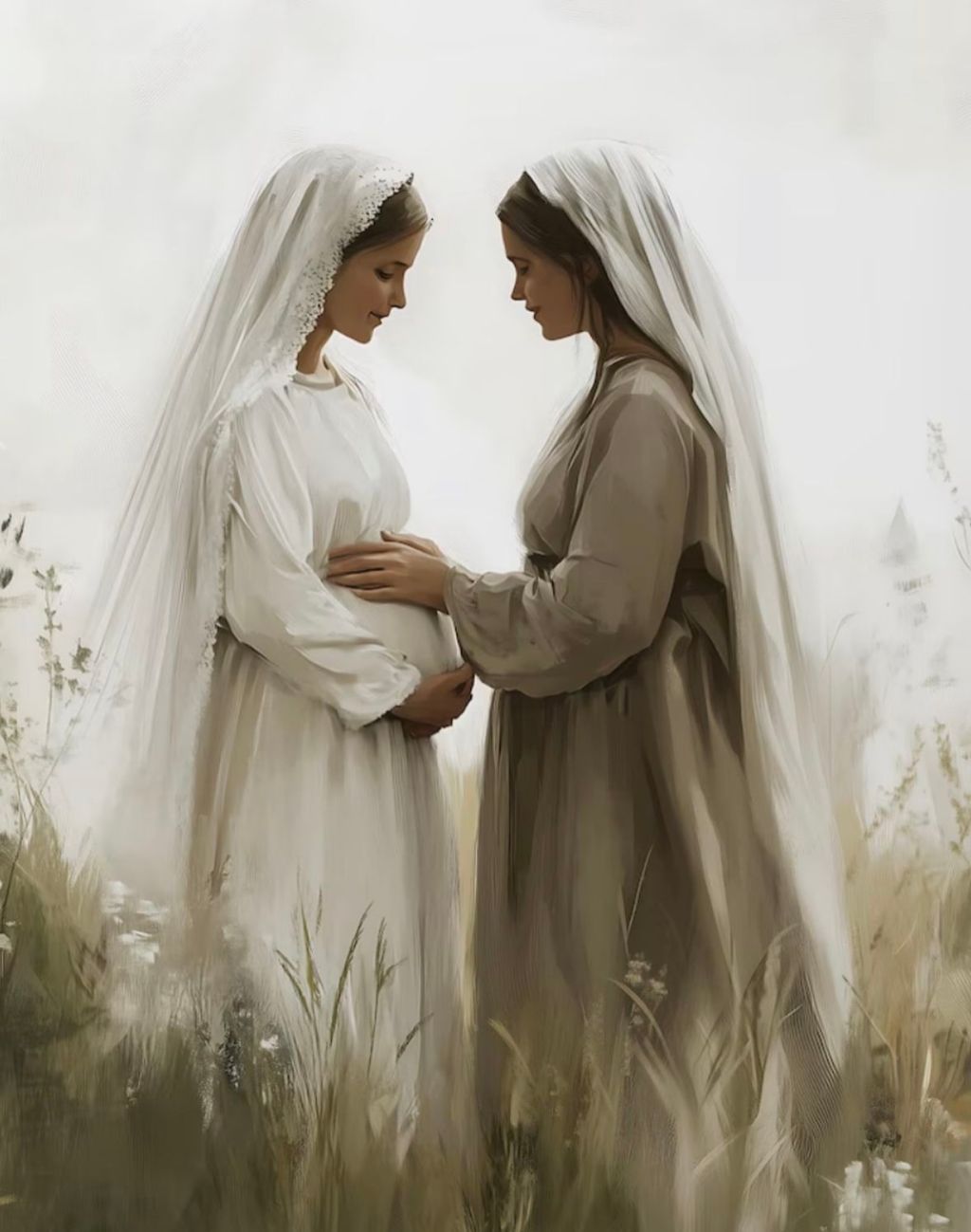
NEW ARK OF THE COVENANT
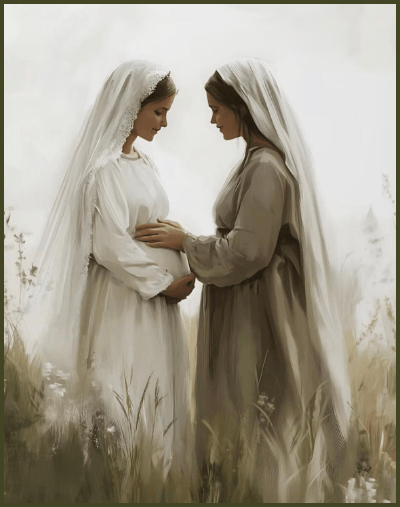
And David was afraid of the Lord that day,
saying: How shall the ark of the Lord come to me?
2 Samuel 6, 9
And whence is this to me, that the mother of my Lord should come to me?
For behold as soon as the voice of thy salutation sounded in my ears,
the infant in my womb leaped for joy.
Luke 1, 43-44
Biblical typology is a method of interpreting scripture that identifies certain figures, events, or institutions in the Old Testament as “types” that prefigure or foreshadow greater realities found in the New Testament. This interpretative approach holds that God has woven a coherent narrative throughout the Bible, with the Old Testament serving as a backdrop to the themes and truths revealed in the New Testament. A “type” is typically a person, event, or thing that serves as an example or symbol of something greater to come. For instance, Adam is often seen as a type of Christ. Just as Adam brought sin into the world, Christ, referred to as the “Second Adam,” brings redemption and reconciliation. Similarly, the Passover lamb in Exodus is viewed as a type of Christ, illustrating that Jesus is the ultimate sacrifice for sin.
In typology, there are several key components to consider: The “type” in the Old Testament corresponds to an “antitype” in the New Testament. The type points to something beyond itself, fulfilled in Christ or in the New Covenant. Typology often carries a prophetic aspect, demonstrating how events and characters in the Hebrew Scriptures anticipate the coming of Jesus and the establishment of God’s kingdom through Him. Biblical typology can reflect the various covenants (such as those with Noah, Abraham, or Moses) that God makes with humanity. These covenants unveil the unfolding of God’s redemptive plan leading to Jesus.
The use of typology deepens understanding of the Christian faith, providing insights and lessons applicable to contemporary believers. It highlights God’s faithfulness and the continuity of His plan throughout history. Typology emphasizes a Christ-centered reading of the Old Testament, underscoring the belief that all scripture ultimately points to Jesus and His work.
Furthermore, biblical typology emphasizes the unity of the Bible, demonstrating that both covenants reflect a consistent divine purpose and plan. This perspective encourages deeper engagement with the historical and spiritual dimensions of scripture, inviting believers to reflect on how these typological relationships can inform their faith and practice today. Through this lens, individuals can gain insights into God’s character, His covenantal faithfulness, and the fulfillment of promises made throughout biblical history. In essence, biblical typology enriches the believer’s journey through scripture, fostering a more comprehensive appreciation for the theological richness embedded within the biblical narrative.
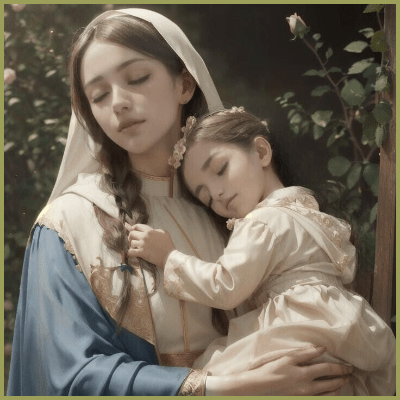
Biblical typology also brings to light the pivotal role of the Blessed Virgin Mary within the Divine plan of redemption. God desires that we fully acknowledge her significance in the economy of salvation, as her role is integral to His overarching mission to redeem mankind. In the Old Testament, we encounter Marian types in various figures, such as Sarah, who embodies the theme of miraculous motherhood; Judith, whose courage and fidelity exemplify a protector of God’s people; and Esther, whose intercession and bravery illustrate the importance of a maternal figure intervening for her people. These Hebrew Matriarchs, along with others, serve as a foreshadowing of Mary, reflecting qualities that align beautifully with her unique mission.
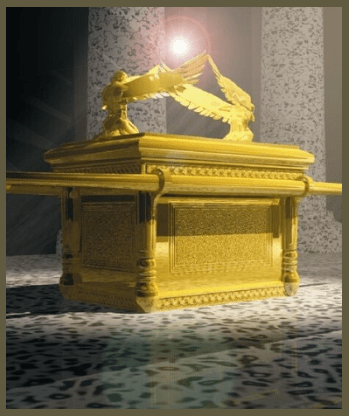
Moreover, the Ark of the Covenant—an essential symbol in the Old Testament that contained the tablets of the Law, manna, and Aaron’s rod—finds its ultimate fulfillment in Mary. Just as the Ark was a sacred vessel that housed God’s presence among His people, Mary became the dwelling place of the Incarnate Word, Jesus Christ. Both the Ark and Mary serve as instruments of divine revelation and salvation. The gold with which the Ark was constructed and the precious items it contained echo the purity and sanctity that characterize Mary as the Mother of God. Let us delve deeper into the parallels between the Blessed Virgin and the Ark of the Covenant, exploring how these profound connections enhance our understanding of Mary’s vital place in salvation history.
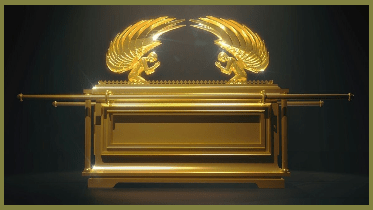
In ancient Judaism, the Ark of the Covenant was one of the most venerated religious relics, alongside the Bread of the Presence, which was kept in the Tabernacle of the Temple. The Ark was considered intrinsically holy due to its unique role as the manifestation of Yahweh’s presence, particularly visible in the form of a glory cloud that enveloped it during key moments of divine revelation. This sacred object was crafted according to precise specifications outlined in the Torah, featuring a wooden frame overlaid with pure gold and adorned with ornate cherubim that faced each other on its lid, known as the Mercy Seat.
The Ark served as God’s personal dwelling place within the terrestrial realm, akin to the Temple in Jerusalem, where it was housed during specific periods when the Israelites were in the Promised Land. It was entirely separate from anything viewed as profane, symbolizing the ultimate connection between the divine and humanity. The sacred purpose for which the Ark was constructed, including its role in rituals, such as the Day of Atonement, where the High Priest would sprinkle blood on it to atone for the sins of the people, further contributed to its exalted status and profound holiness. This reverence for the Ark underscored its significance in Jewish worship and communal identity throughout ancient history.
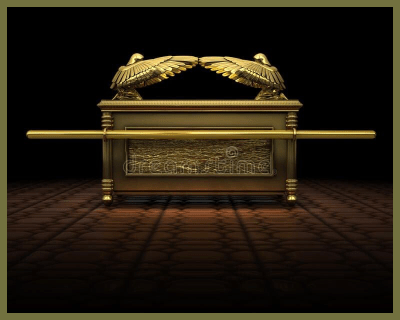
This sacred object, revered as a divine symbol, was crafted from the purest natural materials: incorruptible acacia wood, known in Hebrew as shittim, and the finest gold (tahor). The Ark’s exterior was elegantly covered in gold, while the interior was meticulously lined with the same precious metal, creating a radiant sanctuary for what it contained. A beautifully designed golden wreath encircled the Ark, serving as a striking adornment that emphasized its sanctity. The Ark of the Covenant was imbued with such profound holiness that anyone who dared to touch it without undergoing the required ritual purification would be struck dead, regardless of their intentions or reverence (2 Sam 6:6-7). This underscores the immense power and sacredness associated with the Ark.
Initially, the Ark was housed within the Tent of Meeting, a portable temple or tabernacle constructed by Moses. This sacred space was designed to be a transient dwelling for God’s presence as the Israelites journeyed through the wilderness. Later, the Ark found its permanent home in the Holy of Holies, the innermost sanctuary of the magnificent Temple built by King Solomon in Jerusalem. The Holy of Holies was a meticulously maintained environment, symbolizing the epitome of purity.
According to Jewish sacred law (Leviticus 16:2-4), only the high priest could enter this sacred space, and he was permitted to do so only once a year on Yom Kippur, the Day of Atonement. This day was set aside for the high priest to make atonement for the sins of the people, emphasizing the gravity of the Ark’s holiness. Moreover, the severity of the regulations surrounding the Ark’s access was underscored by the fact that even the high priest faced death should he enter the inner sanctuary on any other day of the year, highlighting the deep respect and caution that surrounded this most sacred object in Jewish tradition.
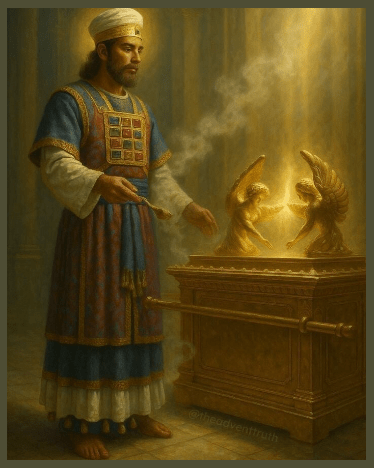
The Ark of the Covenant was a sacred chest made of acacia wood, overlaid with pure gold, symbolizing the divine presence among the Israelites. Inside this revered container lay two stone tablets, meticulously inscribed with the Ten Commandments, which represented the fundamental laws governing the covenant between God and His people. Additionally, the Ark held the budded rod of Aaron, the high priest, a miraculous sign of his divinely appointed leadership, and a golden jar filled with manna, the heavenly food that sustained the Israelites during their arduous journey through the wilderness.
During processions, the Ark was carried with great reverence and joy, accompanied by exuberant singing from the congregation, the harmonious sound of various musical instruments such as trumpets and lyres, and participants adorned in colorful religious vestments symbolizing their dedication to God. This vibrant procession served not only as a celebration of God’s abundant blessings but also as a communal moment to reaffirm and receive the grace of His enduring covenant, as highlighted in 2 Samuel 6:3. It was an occasion marked by spiritual fervor, unity, and a deep recognition of their unique relationship with the Divine.
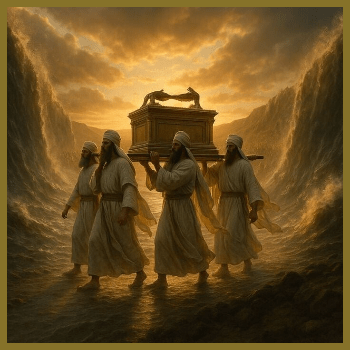
The Ark of the Covenant was profoundly symbolic of God’s providential care throughout the history of the Israelites. A prime example of this divine assistance is seen during the Battle of Jericho, where the Ark was carried by the Levitical priests as the Israelites marched around the fortified city’s walls for seven consecutive days. This act not only demonstrated their faith but also mirrored the seven days of Creation, culminating in the miraculous collapse of the walls on the seventh day (Josh 6:11-17).
Additionally, the Ark played a crucial role during the Israelites’ crossing of the Jordan River. As the priests, bearing the Ark, stepped into the water, God orchestrated a miraculous event by halting the flow of the river, allowing the people to cross on dry ground (Josh 3:2-4, 17). This moment was further commemorated by Joshua, who set up the Twelve Stones at Gilgal—a tangible reminder of their entry into the Promised Land. These stones serve as a prefiguration of the twelve Apostles, who would later become the foundational ministers of Christ’s sacrament of Baptism, initiating new believers into the Church.
When the Israelites venerating the Ark engaged in worship and praise, they were not merely honoring a physical object; they were acknowledging and celebrating God’s Divine Presence among them and the abundant grace He bestowed upon them. In a similar manner, Catholics who venerate the Blessed Virgin Mary do so with the understanding that she serves as a powerful intercessor, facilitating the distribution of God’s grace to His people. Just as the Ark was central to the Israelites’ relationship with God, Mary holds a vital place in the spiritual journey of Catholics, guiding them closer to her Son, Jesus Christ.
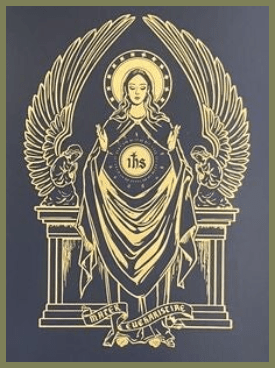
And the temple of God was opened in heaven: and the ark of his
testament was seen in his temple, and there were flashes of lightning,
and voices, and an earthquake, and great hail. And a great sign appeared
in heaven: A woman clothed with the sun, and the moon under her feet,
and on her head a crown of twelve stars.
Revelation 11, 19… 12, 1
Since the earliest days of Christianity, the Catholic Church has held in deep veneration the Blessed Virgin Mary, recognizing her as the Ark of the New Covenant (See Revelation 11:19; 12:1). The first converts to Christianity were predominantly Jews, as most adherents during the Apostolic Age of the first century were rooted in Judaic traditions and beliefs. Because of this strong heritage, they naturally recognized Mary as the anti-type of the Ark of the Covenant, seeing her as the culmination of this sacred symbol in their faith.
This parallel, which depicted Mary as a vessel carrying the divine presence, was so pronounced that it evolved into a cherished tradition within the Church—a tradition that endures to this day. Just as the ancient Israelites revered the Ark for its holiness and significance, particularly until its disappearance prior to the Babylonian Captivity in the 6th century B.C., so too did the early Christian community hold the mother of Jesus in profound esteem. Her unique role as the Theotokos, or God-bearer, signified her extraordinary relationship with the divine, particularly through her bearing of Christ, the incarnate Word of God. This understanding emphasized not only her sanctity but also her pivotal association with the physical manifestation of God’s presence on earth, as encapsulated in the hypostatic union in Christ’s incarnation.
Moreover, the faithful deeply recognized Mary’s exceptional holiness and her profound separation from all that is profane and even sinful. The nascent Church revered her as the chosen vessel who conceived the Divine Word made flesh, Jesus Christ, in her womb through the miraculous power of the Holy Spirit, as described in Luke 1:35 and John 1:14. Her body can be compared not only to the incorruptible acacia wood that framed the Ark of the Covenant but also to the magnificent Temple where the Ark was ultimately housed. In this metaphor, her womb is like the sacred sanctuary, the Holy of Holies, which housed the Ark itself—an area so sacred that only the High Priest could enter, and only once a year, on the Day of Atonement.
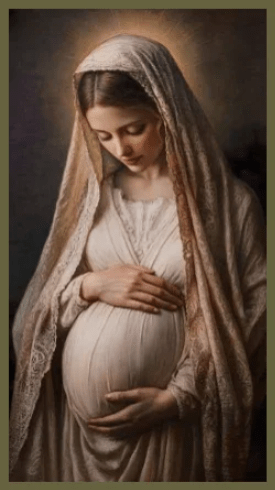
The pristine gold that adorned the Ark draws a parallel to the purity of Mary’s soul, which is vividly underscored in Luke 1:46 as she praises God, reflecting her deep faith and commitment. This symbolism emphasizes her role as the immaculate mother of Jesus, highlighting that just as the Ark contained the presence of God through the tablets of the Law, so too did Mary carry the very embodiment of God in her womb. Her exceptional grace set her apart and has made her a central figure in Marian devotion throughout the centuries.
The connection becomes profoundly clear as we reflect on the significant role of Mary, the mother of our Lord. In her, she held not only the Divine Word, the Logos made flesh, but also embodied the High Priest in the order of Melchizedek, as referenced in Hebrews 5:8-10. This priestly lineage emphasizes the unique mediating role of Jesus, who offers Himself as a perfect sacrifice. Furthermore, Mary bore within her the “true manna come down from heaven” — the “Bread of Life,” as articulated in John 6:35 and 51. This exquisite metaphor highlights Jesus as the sustenance for our souls, fulfilling the deepest spiritual hungers of humanity.
Mary serves as the anti-typical embodiment of the sacred relics housed within the Ark of the Covenant. Just as the Ark contained the tablets of the Law, the manna, and the staff of Aaron, which collectively pointed to God’s covenant and presence among His people, so too did Mary encompass the ultimate fulfillment of these sacred objects in the person of her Divine Son. The importance of Mary cannot be overstated; she is the culmination of the Ark of the Covenant, for her womb was the sacred dwelling place where the very incarnate Word of God took flesh. By conceiving and bearing Him, Mary becomes the new Ark, embodying grace and divine mystery and serving as a powerful testament to God’s plan for salvation and the intimate relationship between humanity and the divine.
The existence of a nascent Marian tradition within the Church is undeniably supported by biblical literature and theological interpretation. In St. Luke’s Gospel, a deliberate parallel is drawn between Mary and the Ark of the Covenant, as he alludes to significant persons and pivotal events described in the Book of Exodus, the Second Book of Samuel, 1 Chronicles, 1 Kings, and Zephaniah. This connection underscores the sanctity and importance of Mary in the narrative of salvation. Furthermore, the evangelist’s writings, inspired by Divine guidance, rely heavily on the Apostolic Tradition of the Church, which has faithfully transmitted the teachings and experiences of those who were the first witnesses to Christ’s ministry. The authenticity of his Gospel is grounded in the oral traditions passed down from these early disciples, as articulated in Luke 1:1-4, where he emphasizes the importance of these traditions in conveying the life and teachings of Jesus Christ. This foundation not only reinforces the historical validity of the Marian tradition but also highlights its theological significance within the broader context of Christian faith.
Keeping this in mind, let us delve deeper into Luke’s writings as we continue our critical examination of the emerging Marian tradition within the Church. In doing so, we should pay particular attention to how Luke draws parallels between Mary and the Ark of the Covenant, utilizing numerous references to people and events from the Old Testament to enrich our understanding. This correlation is far from incidental; rather, it serves as a powerful illustration of Biblical typology. The significance of Mary is profound, and God seems to urge us to reflect closely on her role as depicted in Sacred Scripture. This exploration requires us to recognize that her importance is not always articulated in explicit terms or a strictly literal interpretation (sensus plenior). To grasp the dimensions of Mary’s significance fully, we must approach the Scriptures through multiple lenses. This encompasses a rich tapestry of meanings, including the spiritual sense—whether allegorical, analogical, anagogical, or moral.
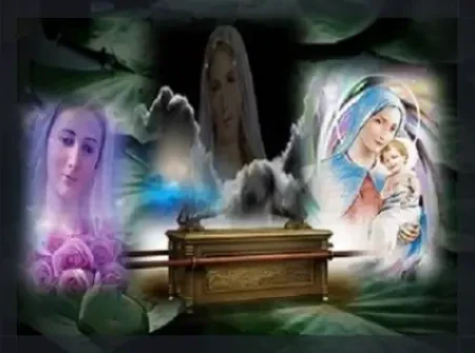
To begin with, Mary arises and goes to the hill country of Judea to stay with her kinswoman, Elizabeth, for three months. David arises and goes to the same hill country to stay with the Ark for three months. Elizabeth lives in Ein Kerem, and Abu Ghosh, where the Ark resides, is only a short walk away. Mary and the Ark are both on a journey to the same hill country of Judea.
In those days Mary arose and went with haste into the hill country, to a city of Judah, and she entered the house of Zechari′ah and greeted Elizabeth.
–Luke 1, 39
And David arose and went with all the people who were with him from Ba′ale-judah, to bring up from there the ark of God, which is called by the name of the Lord of hosts who sits enthroned on the cherubim. And they carried the ark of God upon a new cart, and brought it out of the house of Abin′adab which was on the hill.
-2 Samuel 6, 2-3
John the Baptist leaps for joy in his mother’s womb at the sound of Mary’s greeting. King David leaps for joy as he dances before the Ark.
And it came to pass, that when Elizabeth heard the salutation of Mary,
the infant leaped in her womb. And Elizabeth was filled with the Holy Ghost.
– Luke 1, 41
And when the ark of the Lord was come into the city of David, Michal the daughter of Saul, looking out through a window, saw king David leaping and dancing before the Lord: and she despised him in her heart.
– 2 Samuel 6, 16
Elizabeth deferentially asks her much younger cousin Mary how the mother of her Lord (Adonai / Kyrios) should come to her. David, being reverential to the Lord (Adonai / Kyrios), asks how the Ark should come to him.
“And whence is this to me,
that the mother of my Lord should come to me?”
– Luke 1, 43
And David was afraid of the Lord that day, saying:
How shall the ark of the Lord come to me?
– 2 Samuel 6, 9
Mary stays in the house of Elizabeth for three months to look after her. The Ark is kept in the house of Obededom for three months. The Lord blesses his house and all his possessions because of the Ark’s presence. Elizabeth’s house is blessed the first instant her infant leaps in her womb at the sound of Mary’s voice. Mary (the new Ark of the Covenant) and the Ark of the Covenant, respectively, serve as moral and physical channels of divine grace.
And Mary abode with her for about three months;
and she returned to her own house.
– Luke 1, 56
And the ark of the Lord abode in the house of Obededom the Gethite three months:
and the Lord blessed Obededom, and all his household.
– 2 Samuel 6, 11
And the ark of God remained in the house of Obededom three months:
and the Lord blessed his house, and all that he had.
– 1 Chronicles 13, 14
Finally, Mary returns home from visiting Elizabeth and eventually goes to Jerusalem to present her infant Jesus to God in the Temple. The Ark leaves the house of Obededom and is taken to Jerusalem, where eventually, the presence and glory of God are manifested in the newly built Temple. There the Ark is resting in the sacred sanctuary of the Holy of Holies.
And after eight days were accomplished that the child should be circumcised, his name was called JESUS, which was called by the angel before he was conceived in the womb. And after the days of her purification, according to the law of Moses, were accomplished, they carried him to Jerusalem to present him to the Lord.
– Luke 2, 21-22
And it was told king David that the Lord had blessed Obededom, and all that he had, because of the ark of God. So David went and brought away the ark of God out of the house of Obededom into the city of David with joy. And there were with David seven choirs and calves for victims.
– 2 Samuel 6, 14
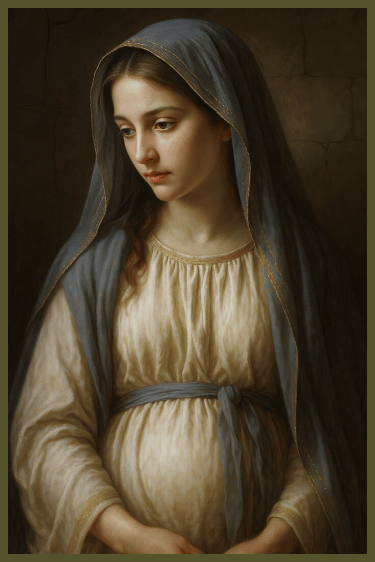
In the Greek translation of the Hebrew Old Testament, the Septuagint has the salutation chairo (χαρῆτε) for “sing aloud”. The word can mean “to be full of cheer” or “rejoice,” as we have it in St. Luke’s Gospel. The reason for Mary to rejoice and be full of cheer is that God is in her midst, just as He was for Israel in the figure of Daughter Zion. But Mary’s cause for rejoicing is that God has favored her to conceive and bear His Only-begotten Son. God is in her midst much more by being physically present in her womb. The Hebrew word for God in Israel’s midst is qereb (keh’-rev), meaning “in the womb”. Further, the same word is used elsewhere in the Hebrew OT to describe how God dwells amid His people through the Ark in a physical sense.
And coming to her the angel said,
“Rejoice, O, favoured by grace! The Lord is with you.”
– Luke 1, 28
καὶ εἰσελθὼν ὁ ἄγγελος πρὸς αὐτὴν εἶπεν Χαῖρε κεχαριτωμένη
ὁ κύριος μετὰ σοῦ εὐλογημένη σὺ ἐν γυναιξίν
Sing aloud, O daughter of Zion; shout, O Israel!
Rejoice and exult with all your heart, O daughter of Jerusalem!
The Lord has taken away the judgments against you,
he has cast out your enemies.
The King of Israel, the Lord, is in your midst;
you shall fear evil no more.
– Zephaniah 3, 14-16
Χαῖρε σφόδρα, θύγατερ Σιών, κήρυσσε, θύγατερ ῾Ιερουσαλήμ· εὐφραίνου καὶ κατατέρπου ἐξ ὅλης τῆς καρδίας σου, θύγατερ ῾Ιερουσαλήμ.περιεῖλε Κύριος τὰ ἀδικήματά σου, λελύτρωταί σε ἐκ χειρὸς ἐχθρῶν σου· βασιλεὺς ᾿Ισραὴλ Κύριος ἐν μέσῳ σου, οὐκ ὄψῃ κακὰ οὐκέτι. ἐν τῷ καιρῷ ἐκείνῳ ἐρεῖ Κύριος τῇ ῾Ιερουσαλήμ· θάρσει, Σιών, μὴ παρείσθωσαν αἱ χεῖρές σου
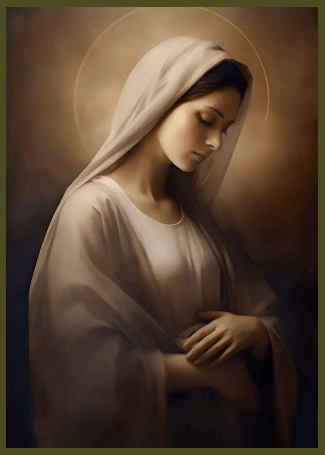
Further, we read in the Septuagint Book of the Exodus that the Lord covered the Tabernacle where the Ark was kept and filled it with His glory. This refers to the bright glory cloud (Shekinah), which the Jews believed to be a physical manifestation of God’s overshadowing spiritual presence and His word. Luke tells us in his Gospel that the power of the Highest shall “overshadow” Mary. He uses the same original Greek word episkiazo (ἐπισκιάζω) for the word ‘overshadow’ in the future tense: episkiasei (ἐπισκιάσει). The Holy Spirit came upon Mary and “covered” her with His shadow, by whose power she conceived the Divine Word in the flesh. The sanctuary of her womb was filled with God’s glory as He enveloped her body’s temple with His physical incarnation.
And the angel answered and said unto her, The Holy Ghost shall come upon thee, and the power of the Highest shall overshadow thee: therefore also that holy thing which shall be born of thee shall be called the Son of God.
– Luke 1, 35
καὶ ἀποκριθεὶς ὁ ἄγγελος εἶπεν αὐτῇ Πνεῦμα Ἅγιον ἐπελεύσεται ἐπὶ σέ, καὶ δύναμις Ὑψίστου ἐπισκιάσει σοι· διὸ καὶ τὸ γεννώμενον ἅγιον κληθήσεται Υἱὸς Θεοῦ.
And Moses was not able to enter into the tabernacle of testimony, because
the cloud overshadowed it, and the tabernacle was filled with the glory of the
Lord.
– Exodus 40, 35
καὶ οὐκ ἠδυνάσθη Μωυσῆς εἰσελθεῖν εἰς τὴν σκηνὴν τοῦ μαρτυρίου,
ὅτι ἐπεσκίαζεν ἐπ᾿ αὐτὴν ἡ νεφέλη καὶ δόξης Κυρίοs ἐνεπλήσθη ἡ σκηνή.
Gary G. Michuta (Making Sense of Mary: Grotto Press) cites Zechariah 2:10 to connect the verse with John 1:14. In the prophecy, God says, “I am coming to dwell among you.” The author informs us that the Greek word for “dwell” is kataskenoso, whose root word for “tent” or “tabernacle” is skene, viz., the portable tent or tabernacle that housed the Ark of the Covenant before Solomon built the Temple. In the Gospel of John (1:14), the Greek word for “dwelt” is eskenosen, which is derived from the same root word skene. So, the evangelist says, “The Word became flesh and tabernacled among us.” This occurred when Mary was overshadowed by the Holy Spirit and conceived our Lord. God’s incarnated presence filled the temple of her body and the sanctuary of her womb, in which He personally dwelled and filled her with His glory as He had the Ark of the Covenant.
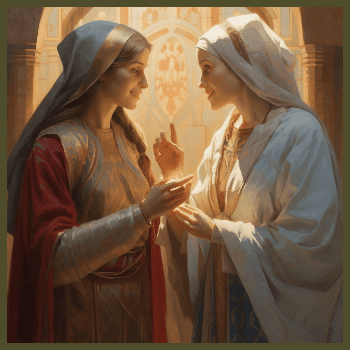
Last but not least, the Greek word anephōnēsen or ‘ἀνεφώνησεν’ (“lift up the voice” / “cry out with a loud voice”) rarely appears in sacred Scripture. In the New Testament, it appears only once, and concerning Mary, that is in Luke 1, 42:
And she cried out with a loud voice, and said:
Blessed art thou among women,
and blessed is the fruit of thy womb.
– Luke 1, 42
καὶ ἀνεφώνησεν κραυγῇ μεγάλῃ καὶ εἶπεν Εὐλογημένη σὺ ἐν γυναιξίν,
καὶ εὐλογημένος ὁ καρπὸς τῆς κοιλίας σου.
There are only five instances in which this word is employed in the Septuagint, and on these occasions, it is in association with the Ark and Temple worship (1 Chron. 15:28; 16:4,5, 42; 2 Chron. 5:13). For instance:
So, they brought in the ark of God, and set it in the midst of the tabernacle which David pitched for it… And he appointed before the ark of the covenant of the Lord, Levites to minister [and] lift up the voice, and to give thanks and praise the Lord God of Israel.
– 1 Chronicles 16, 1-4
καὶ ἔταξε κατὰ πρόσωπον τῆς κιβωτοῦ διαθήκης Κυρίου ἐκ τῶν Λευιτῶν λειτουργοῦντας ἀναφωνοῦντας καὶ ἐξομολογεῖσθαι καὶ αἰνεῖν Κύριον τὸν Θεὸν ᾿Ισραήλ·
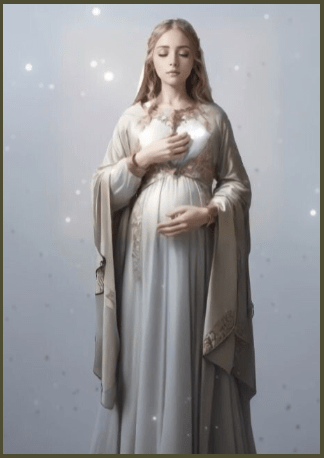
Thus, the parallelism found in the Gospel of Luke serves to affirm the emerging Marian tradition within the early Church, reflecting a significant development stemming from Judaic beliefs held by the first Christian communities. These communities were deeply rooted in the oral transmission of God’s word, which they received directly from the Apostles. Mary’s designation as the Ark of the New Covenant represents a profound theological link between the Old Testament and the New Testament, illustrating how the former is fulfilled in the latter. This connection, deeply embedded in the fabric of Christian belief, often eludes those who lack familiarity with the Old Testament narratives and the rich traditions of ancient Judaism. Recognizing this parallel enhances our understanding of Mary’s pivotal role in salvation history and the continuity of God’s covenantal relationship with humanity.
The Ark of the Covenant, as described in sacred texts, was meticulously crafted by God to carry His divine presence in this earthly realm. In a parallel manner, God uniquely created Mary to bear the incarnate Divine Word, achieved through the overshadowing of the Holy Spirit at the moment of the Annunciation. Both the Ark of the Old Covenant and Mary, revered as the Ark of the New Covenant, were endowed with intrinsic holiness through the active intervention of the Divine.
Just as the Ark was constructed from the purest gold inside and out, symbolizing divine purity, and the incorruptible acacia wood—known for its resistance to decay and destruction by worms and insects—was chosen to signify God’s presence among His people, Mary was similarly sanctified. At the moment of her conception, God preserved her soul in a state of grace, free from all stains of original sin, thereby ensuring that her entire being would be a fitting dwelling place for the Messiah. This sanctification allowed Mary to embody a unique role in salvation history, serving as the vessel through which God’s ultimate plan was manifested in the world. In both instances, the sanctity and purity of these vessels reflect the profound nature of their divine missions and the importance of their roles in God’s covenant with humanity.
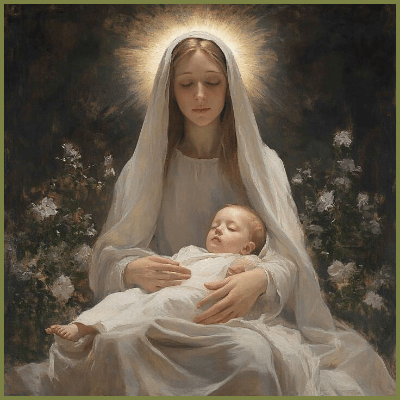
As with all Catholic Marian doctrines and dogmas, our deeper understanding of Mary’s role in the economy of salvation enriches our comprehension of her significance and enhances our appreciation for her divine Son, Jesus Christ. In particular, Mary’s role as the Ark of the New Covenant emphasizes the profound and sacred truth of Christ’s identity—the one divine Person who embodies both divine and human natures, forever united in the hypostatic union while remaining distinct in their attributes. This analogical comparison to the Ark of the Covenant, which contained the presence of God and the sacred items of the Old Testament, highlights Mary’s special vocation as the bearer of God himself. Just as the Ark was central to Israel’s worship and covenant relationship with God, Mary holds a pivotal place in the narrative of salvation history, bridging the old covenant with the new through her obedience and faith. By reflecting on Mary’s unique position and qualities, we can better grasp the depths of the Incarnation and the magnanimity of God’s love revealed in Jesus Christ.
In the words of St. Hippolytus (200 A.D.): “For whereas the Word of God was without flesh, He took upon Himself the holy flesh (the true manna come down from Heaven) by the holy Virgin.” Mary was made holy by the grace of God, for she was predestined to be overshadowed by the Holy Spirit and carry the Divine Presence in the sanctuary of her womb. She is the new Ark, which was “overlaid with pure gold with the Word within and the Holy Spirit without.” St. Gregory Thaumaturgus (c. A.D. 260) concurs: The Ark of the Covenant is truly fulfilled in the holy Virgin Mother, “gilded within and without,” having “received the treasure of sanctification.” St. Dionysius of Alexandria (c. A.D. 248) testifies following this sacred Tradition of the Church: “As Christ, our Priest was not chosen by the hand of man, so neither was His tabernacle framed by men, but was established by the Holy Spirit; and by the power of God is that tabernacle protected” from all putridity and corruption, “to be had in everlasting remembrance, Mary, God’s Virgin Mother.”
AVE MARIA
Early Church Testimony
St.Hippolytus (c. A.D. 205)
In Daniel Vl
St. Gregory Thaumaturgus (ante. A.D. 270)
Orat. in Deip. Annunciat.
S. Ephrem, On the Nativity, 3
(ante. A.D. 370)
St. Athanasius of Alexandria (ante AD 373)
Homily of the Papyrus of Turin, 71:216
St. Ambrose of Milan (ante. A.D. 397)
Serm. xlii. 6, Int. Opp., S. Ambrosiiz
St. Jerome (ante A.D. 420)
Epist. Xxii.

 Marian Scripture
Leave a comment