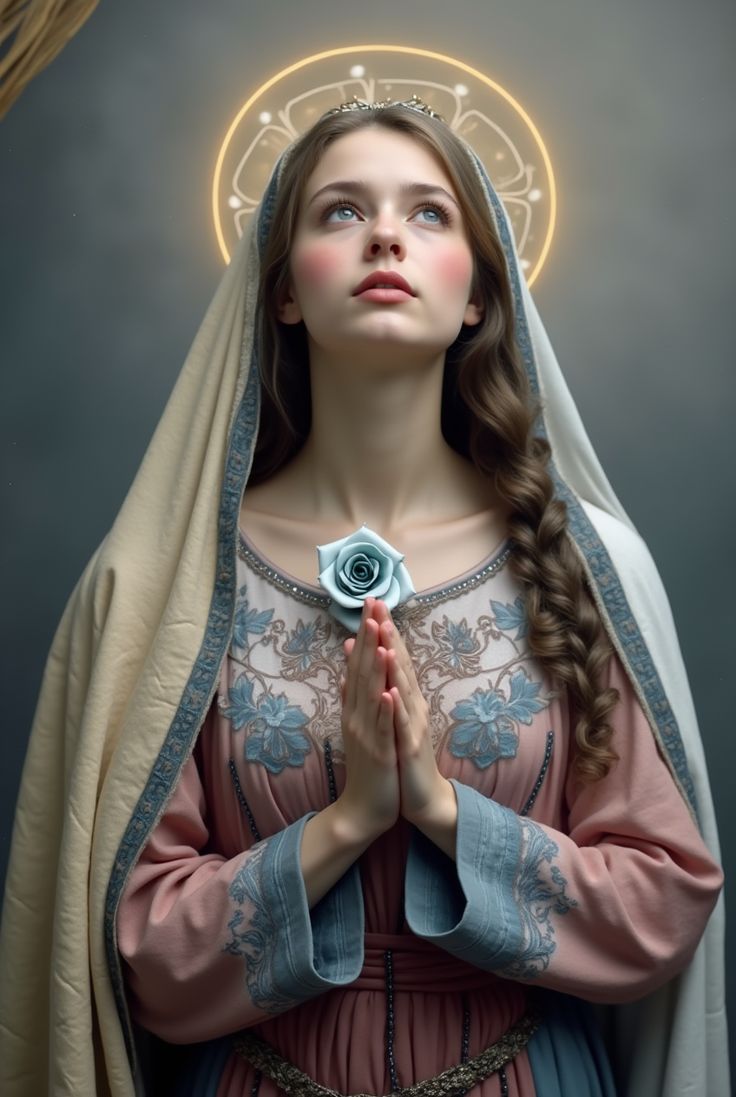
THE IMMACULATE CONCEPTION
I will greatly rejoice in the Lord,
and my soul shall be joyful in my God:
for he hath clothed me with the garments of salvation:
and with the robe of justice he hath covered me,
as a bridegroom decked with a crown,
and as a bride adorned with her jewels.
Isaiah 61, 10
When the Lord restored the fortunes of Zion,
we were like those who dreamed.
Our mouths were filled with laughter,
our tongues with songs of joy.
Then it was said among the nations,
“The Lord has done great things for them.”
The Lord has done great things for us,
and we are filled with joy.
Psalm 126, 1-6
And Mary said,
“My soul glorifies the Lord, and my spirit rejoices in God my Savior,
for he has been mindful of the humble state of his servant.
From henceforth all generations shall call me blessed;
for He who is mighty has done great things to me,
and holy is His name.”
Luke 1:46-49
Isaiah prophesied during a tumultuous time for the people of Israel. The original audience faced destruction, exile, and oppression. After the fall of Jerusalem in 586 BCE, many Israelites were taken captive to Babylon. The themes of Isaiah often revolve around hope, restoration, and the promise of a better future for a downtrodden people. In this verse, the speaker expresses profound joy and gratitude to God for salvation and justice. The imagery of being clothed in garments of salvation and righteousness indicates that God had acted to restore His people. The notion of clothing symbolizes identity and transformation; just as one puts on clothes, the speaker describes how God has given them a new identity through divine favor and grace.
The comparison of the speaker to a bridegroom with a crown and a bride adorned with jewels suggests joyfulness and celebration. These images denote the beauty and purity of a covenant relationship with God. In the cultural context, weddings were significant social events that symbolized joy, new beginnings, and covenant faithfulness.
Moreover, the passage signifies not only physical restoration after exile but also spiritual renewal. It conveys the message that God’s intervention leads to a joyful state for His people, highlighting a relationship where joy and righteousness are paramount. This reflects a broader biblical theme where God’s actions often lead to healing and rejoicing among His people. Isaiah 61 is usually viewed as a messianic passage that foretells the coming of one who will bring true liberation and healing. This background provides an additional layer of meaning, particularly for Christians who see parallels between this passage and the life and mission of Jesus Christ.
In the context of Israel, “the Daughter of Zion” signifies the collective identity of the people of Jerusalem and, by extension, the Jewish nation. The language of joy and celebration in Isaiah points to a future hope of restoration and redemption. Israel, through its tumultuous history, often experienced suffering and exile but always held onto the promise of God’s salvation.
The “garments of salvation” and “robe of justice” can be interpreted as God’s provision for His people. These garments signify a transformative moment for Israel, in which they are not merely covered but richly adorned, symbolizing both protection and an exalted status among nations. The imagery of the bridegroom and bride also reflects the covenant relationship between God and Israel, where God is depicted as a loving partner who beautifies His chosen people.
The connection to the Virgin Mary is equally significant. Christian theology often regards Mary as the ultimate embodiment of Israel’s hope realized in the Messiah. Just as Israel is clothed with salvation and justice, Mary is seen as the bearer of Jesus, who brings these very gifts to humanity. Her acceptance of God’s will signifies a new beginning, echoing Israel’s call to faithfulness. The metaphor of a bride adorned with jewels resonates deeply with Mary’s role. She is often referred to as the new Eve, and Spouse of the Holy Spirit, a figure of purity and grace, reflecting the hope and promise found within Israel. The joy expressed in Isaiah is also evident in the Magnificat (Luke 1:46-55), where Mary exults in God’s salvation, paralleling the joy of Israel’s restoration.
Furthermore, Isaiah 61:10 is frequently interpreted as being intricately linked to the Catholic doctrine of the Immaculate Conception of the Virgin Mary. This biblical passage conveys profound themes of righteousness, divine favor, and the profound joy that follows salvation—all of which closely align with the beliefs surrounding Mary’s unique and pivotal role in salvation history. Specifically, the verse emphasizes the transformative joy and gratitude that stem from God’s redemptive acts, reflecting the Catholic view of Mary as a model of divine grace and holiness.
The doctrine of the Immaculate Conception holds that Mary was conceived without original sin, a pre-emptive act of divine grace that set her apart from the rest of humanity. This belief posits that God, in His infinite wisdom, prepared Mary to be the Mother of Jesus Christ by ensuring her purity and sanctity from the very moment of her conception. As such, Mary’s immaculate conception is seen as essential for her ability to accept the Annunciation and bear the Savior.
The connection between Isaiah’s prophetic words and Mary’s purity illustrates the depth of her sanctity and the significant theological implications of her role as the Theotokos, or God-bearer. Many Catholics believe that the reverence for Mary’s purity, foreshadowed in Isaiah’s prophecy, signifies not only her importance in the Incarnation but also the nature of redemption itself. This understanding elevates Mary’s status in Catholic theology, celebrating her as a powerful intercessor who brings believers closer to Christ through her unique grace-filled relationship with God.

Mary is celebrated in Christian theology for her role as the Mother of God, and her relationship with God is often characterized by her unique state of grace. According to tradition, Mary was not seen as a sinner who required salvation in the conventional sense; instead, she was regarded as having been perfectly redeemed from the moment of her conception. This belief is rooted in the idea that she was “clothed with the garments of salvation” and “wrapped in a mantle of justice” through the merits of Christ, even before his birth. Mary’s significance is comparable to Israel’s restoration to grace following a period of exile, as she is viewed as the ultimate expression of the redemption of Daughter Zion. In this role, she symbolizes God’s re-creation of humanity before the fall into sin.
Catholics believe that Mary, like all humanity, was initially subject to the stain of original sin and thus needed redemption (as referenced in Romans 5:18). However, the doctrine of the Immaculate Conception conveys that Mary experienced a unique and complete form of redemption, grounded in Christ’s anticipated merits. According to this belief, God bestowed His grace upon Mary so that she would not be inclined to sin by nature. While humanity’s salvation can be likened to being rescued from a state of sinfulness, Mary’s redemption is viewed as a protective measure; she was preserved from ever entering into sin. In this context, Mary’s redemption is described as preservative, contrasting with the curative redemption experienced by others, who bear the consequences of the original sin caused by a pivotal free choice made at the dawn of humanity.
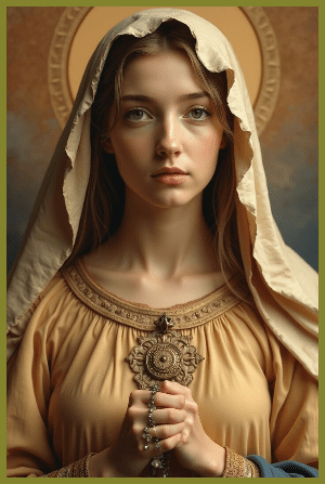
Mary is often described as possessing a remarkable intellect free of ignorance and error. Her will is believed to align perfectly with the Divine will, demonstrating a unique obedience that avoids the obstinacy that can sometimes obstruct adherence to God’s desires. Furthermore, her senses are noted for not becoming overly preoccupied with material concerns, allowing her to maintain a strong focus on spiritual matters.
Significantly, no negative thoughts or disordered passions are attributed to her character, which is consistent with the belief that she was created holy and perfect by God. In Catholic theology, the Virgin Mary’s Immaculate Conception endowed her with a preternatural moral state of perfect holiness and freedom from all sin, including original sin and its effects. This condition is often described as her possessing sure “preternatural gifts” that were lost to the rest of humanity after the Fall of Adam and Eve. This divine recreation enabled her to be the ideal mother of Jesus, the Son of God.
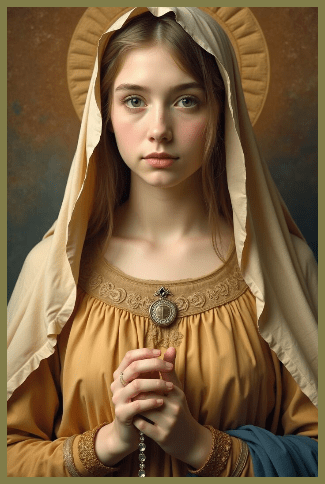
The text from Psalm 126 speaks to a time of restoration and joy for the people of Zion after a period of suffering and exile. It captures the emotional response of a community that has experienced divine intervention and liberation, with imagery emphasizing laughter, songs of joy, and the recognition of God’s marvelous deeds. This psalm celebrates the transformation from despair to hope, underscoring the belief that God has acted on behalf of His people.
In its primary context, Zion can be understood as a representation of Jerusalem, the center of Jewish worship and identity. The restoration referred to in the psalm likely alludes to the return of the Israelites from Babylonian exile to their homeland, a moment celebrated for fulfilling divine promises. The collective joy expressed in these verses highlights how the nation’s fortunes are intertwined with their covenant relationship with God, reflecting a deep sense of national and spiritual revival.
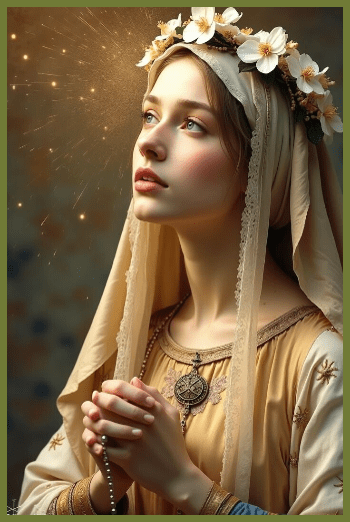
The Blessed Virgin Mary is often referred to as Daughter Zion in a spiritual context. She embodies the fulfillment of the prophetic imagery found in Scripture. She is described as being “clothed with the sun,” representing justice, and standing “with the moon under her feet,” as illustrated in Revelation 12:1. This imagery signifies the radiant glory of God reflected in her soul, which is believed to remain undiminished throughout her life.
Moreover, her role establishes her enmity with the serpent or dragon, echoing the prophetic promise in Genesis 3:15 regarding the conflict between good and evil. The significance of Mary’s position as the divine mother is emphasized by the belief that God has performed “great things” for her, highlighting her holiness and the reverence in which she is held. This understanding brings a sense of joy and appreciation to many believers who celebrate her legacy (Luke 1:48).

AVE MARIA

 Marian Scripture
Leave a comment