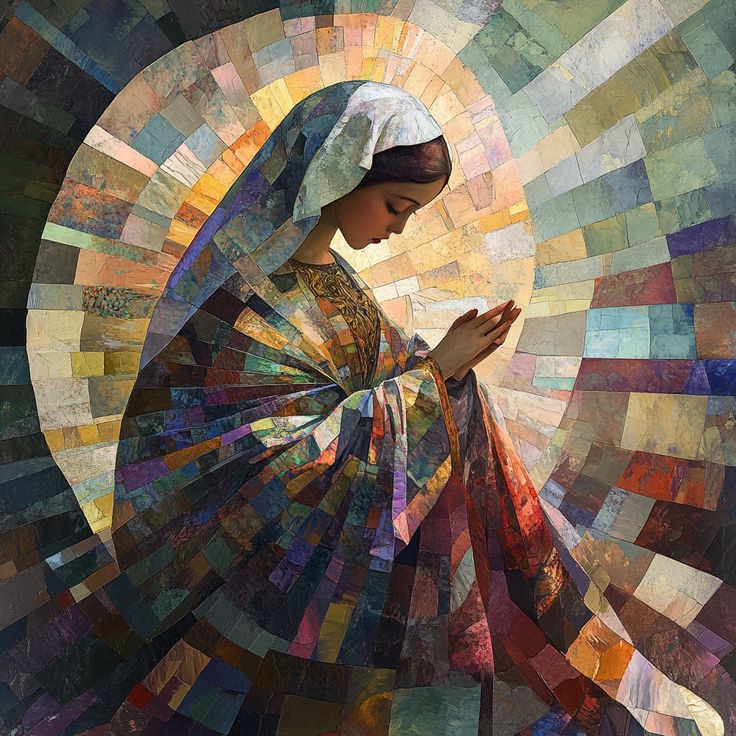
MATRIARCH OF THE COVENANT
“Remember us, O Lord. Reveal yourself in this time of our tribulation, and give me courage, O King of gods and Master of every dominion. Give me the power of persuasive speech when I face the lion and enable me to turn his heart to hatred of the one who is our enemy so that he and all those who share his feelings may perish. Save us by your arm and come to my aid, for I am alone and have no one on whom to rely but you, O Lord. You know all things. You are fully aware that I hate the honors offered by the wicked and abhor the bed of the uncircumcised or of any alien. You know the straits I am in. I loathe the symbol of my proud position that I wear on my head on days when I appear in public. I detest it as if it were an unclean rag, and I do not wear it on days when I am in private. I, your servant, have never eaten at the table of Haman, nor have I graced the banquet of the king or drunk the wine of libations. From the day I was brought here till now, your servant has had no joy except in you, Lord, God of Abraham. O God, whose power is over all, hear the voice of those in despair. Save us from the power of the wicked, and deliver me from my fear.“
Esther 4, (C) 23-30 (NAB)
And Mary said, “Behold, I am the handmaid of the Lord.
May it be done to me according to your word.“
Luke 1, 38
Esther 4:28-30 is part of a narrative set in the Persian Empire during the reign of King Ahasuerus (commonly identified as Xerxes I, who ruled from 486 to 465 BCE). This book is unique in that it does not mention God directly, yet it is infused with themes of faith, courage, and the survival of the Jewish people. The events of the Book of Esther take place during the Babylonian Exile and the subsequent Persian rule over the Jewish people. Many Jews lived outside Israel, and their identity was often challenged, making Esther’s story particularly resonant as it addresses identity, loyalty, and survival in a foreign land. The narrative reflects the political dynamics of the time, including the tensions between the Persian rulers and the Jewish population.
Esther, a Jewish woman, becomes Queen of Persia, and her position sets the stage for a critical confrontation with Haman, the royal advisor who plots to annihilate the Jewish population. The Jews are facing imminent destruction due to Haman’s decree. Esther’s cousin Mordecai urges her to intercede with the king to save their people. The passage reflects Esther’s deep commitment to God and her faithfulness in the face of adversity. Esther’s declaration that she will never partake in Haman’s feasts underscores her refusal to accept the worldly pleasures offered by someone who seeks to harm her people.

The text emphasizes themes of faithfulness, despair, and hope. Esther’s plea illustrates the emotional and spiritual turmoil experienced by the Jewish community, showcasing their reliance on God during a time of crisis. Her statement that she finds no joy except in God highlights her profound faith and resilience.
This story serves as the foundation for the Jewish festival of Purim, commemorating the deliverance of the Jews from Haman’s plot. The themes of survival, divine providence, and the overcoming of evil are celebrated during this festival, making Esther a figure of resilience and faith. In summary, this passage encapsulates the essence of the Jewish struggle against oppression and the faith in divine intervention, reflecting both personal and communal dimensions of despair and hope within its historical circumstance.
In the Book of Esther, therefore, we witness a woman who, despite being in a foreign land and facing life-threatening circumstances, commits herself wholly to God and her people. Her statement that she has found no joy except in the Lord underscores her spiritual resolve and connection to her faith. As she pleads for the Jewish people’s deliverance from Haman’s plot, Esther serves as an intercessor and protector, demonstrating her bravery by approaching the king uninvited and risking her life for her people. Esther is a symbol of courage and faithfulness. Her actions lead to the salvation of the Jews, emphasizing her pivotal role in God’s plan and her alignment with divine will. She stands as a matriarch of the Jewish covenant, representing hope and resilience in times of despair.
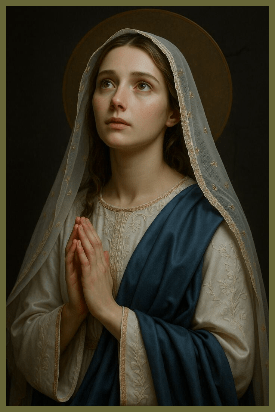
Similarly, in the Gospel of Luke, Mary’s declaration, “Behold, I am the handmaid of the Lord,” signifies profound obedience and humility. Mary accepts her role as the mother of the Messiah, demonstrating her willingness to embrace God’s plan for salvation. Her response to the angel Gabriel reveals a deep faith and trust in God, serving as an essential link in the covenant of grace established through her Son, Jesus Christ. Mary’s role as the bearer of the divine Word makes her a matriarch of the new covenant. Her faith and acceptance not only reflect her personal devotion but also help ensure the Savior’s arrival, ultimately leading to the redemption of humanity.
In the Book of Esther, particularly during her time of distress before approaching King Ahasuerus, Esther turns to prayer. Her prayer reflects her deep faith and reliance on God in a moment of peril. She acknowledges both her vulnerability and her strength, seeking divine guidance and assistance for the critical task ahead. Esther’s earnest plea demonstrates humility, courage, and a profound sense of responsibility for her people. She understands the gravity of her mission and the potential consequences of her actions, which showcases her willingness to confront grave danger for the sake of her community. In her prayer, Esther’s faith not only underscores her personal relationship with God but also signifies her role as an intercessor, aligning her will with God’s plan for the salvation of her people.
Mary’s fiat, expressed in the Gospel of Luke, is her acceptance of the angel Gabriel’s announcement that she would bear the Messiah. Her response, “Behold, I am the handmaid of the Lord; let it be done to me according to your word,” exemplifies complete submission to God’s will. This moment is marked by remarkable faith and courage, as Mary assumes a pivotal role in salvation history, despite the potential social and personal repercussions of her pregnancy. Mary’s fiat embodies her trust in God, demonstrating her readiness to participate in the divine plan and heralding hope and redemption for humanity. Her acceptance of this calling, despite not fully understanding its implications, underscores her unwavering faith and openness to God’s direction.

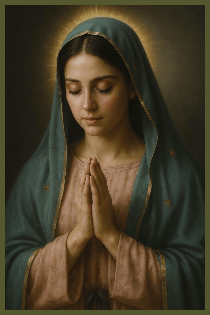
Hence, both women exhibit remarkable bravery and selflessness in their respective contexts. While Esther’s actions lead to the physical salvation of her people from destruction, Mary’s acceptance of her role brings about the spiritual salvation of all through the birth of Jesus Christ. Thus, Mary can be viewed as the anti-type of Esther, in that she fulfills and surpasses the expectations of a matriarch by giving birth to the Savior. At the same time, Esther’s courage serves as a precursor to this pivotal moment in salvation history.
Both women exhibit notable virtues that recur throughout their stories: courage, faith, selflessness, and obedience. Esther’s boldness in approaching the king to advocate for her people reflects extraordinary courage. Similarly, Mary’s willingness to accept the angel’s message, despite the societal challenges she would face, demonstrates a different yet equally profound kind of bravery or moral courage. Esther’s prayer reveals her reliance on divine guidance as she undertakes a perilous mission. Conversely, Mary’s fiat exemplifies faith in God’s plan, highlighting her trust in His wisdom and timing (See her Canticle of Praise in Luke 1:46-55). Esther’s intercession is selfless; she risks her life for the sake of her people. Mary’s acceptance of her mediatory role as the mother of Christ embodies a willingness to subordinate her own inclinations to God’s plan, making both women symbols of ultimate sacrifice for the sake of others. Both Esther and Mary exemplify obedience to God. Esther’s prayer is a plea for strength to fulfill her role, while Mary’s fiat is a declaration of her readiness to act according to God’s wishes.
The virtues of Esther and Mary are intricately intertwined through their profound expressions of faith, unwavering courage, remarkable selflessness, and steadfast obedience to God’s will. Esther’s fervent prayers and her courageous approach in confronting King Xerxes serve as a compelling testament to her pivotal role in saving her people from extermination, embodying the essence of bravery in the face of dire circumstances. Similarly, Mary’s fiat—her willing acceptance of the angel Gabriel’s message that she would bear the Son of God—illustrates her deep trust in divine wisdom and her readiness to embrace a life of sacrifice for humanity. Both women not only shaped the course of biblical history but also stand as enduring symbols of resilience and devotion during times of adversity. Esther’s strategic bravery and Mary’s quiet strength together inspire generations to act with conviction and faith, reflecting their enduring influence as models of holiness and courage in the face of life’s most significant challenges. Their stories remind us of the powerful impact that faith and selfless action can have on the lives of others and the unfolding narrative of salvation.

AVE MARIA

 Marian Scripture
Leave a comment