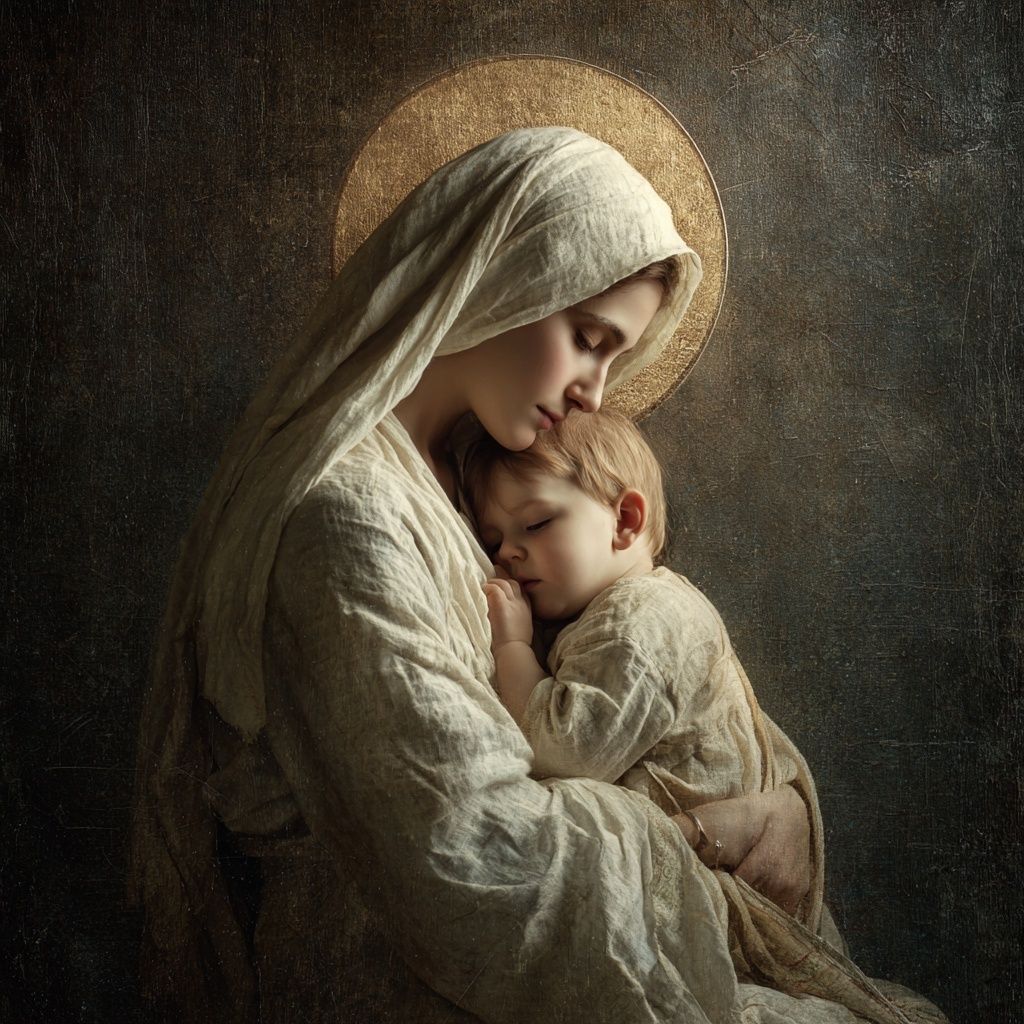
DAUGHTER ZION
How long wilt thou be dissolute in deliciousness, O wandering daughter?
for the Lord hath created a new thing upon the earth:
A woman shall compass a man.
Jeremiah 31, 22
The text from Jeremiah 31:22 speaks to a profound and transformative moment in the prophetic tradition of Israel. In its primary context, this passage addresses the people of Israel, often referred to in biblical literature as “Daughter Zion.” This personification represents Jerusalem and, by extension, the entire nation of Israel. The phrase “how long wilt thou be dissolute in deliciousness” conveys a call to repentance and a recognition of Israel’s waywardness and indulgence, underscoring the need for spiritual renewal. Jeremiah’s prophecy focuses on Israel’s deviation from God due to the worship of false idols associated with surrounding pagan nations, resulting in a breach of their covenant with Him. The prophet foresees a future time when God will infuse His spirit into His faithful people, encouraging them to renounce these false idols and return to Him. The figure of Daughter Zion represents God’s wayward bride, who, through the faithful remnant of Israel, will strive to draw closer to her Husband and seek His favor. The Hebrew word for “compass” is “סוֹבֵב” (sovev), which means to surround, encircle, or encompass. With God’s spirit guiding her, she is poised to find a path to reconciliation as His devoted spouse, ultimately aiming for liberation from foreign captivity.
The statement “for the Lord hath created a new thing upon the earth: A woman shall compass a man,” can be interpreted in various ways, each offering a rich layer of meaning. Historically, this verse has been understood as a profound sign of hope amid despair, symbolizing that, amid Israel’s suffering and exile, God introduces a transformative dynamic in human relationships. The theme of a new beginning resonates deeply within the context of Israel’s struggles, implying that God’s redemptive plan continues to unfold. Many scholars and theologians have linked this verse to the messianic expectations present in the Jewish tradition. In Christian theology, this prophetic declaration is often interpreted as pointing toward the coming of the Messiah, who is believed to bring salvation and restore humanity’s relationship with God. This fulfillment is typically associated with Jesus Christ, who, according to the New Testament, was born of the Virgin Mary and embodies the new covenant, paving the way for deeper spiritual communion. Such interpretations reflect an evolving understanding of gender roles and divine purpose.
In this light, the Virgin Mary becomes a crucial figure connecting this prophecy to the concept of the Immaculate Conception. Mary, as the “Mother of God,” embodies the new thing that God has initiated—an immaculate woman who bears and nurtures the Messiah. The connection to “Daughter Zion” can also highlight Mary’s role in fulfilling Israel’s hope. Just as Daughter Zion represents the faithful remnant of Israel, Mary exemplifies perfect faithfulness and obedience to God. Her acceptance of the angel Gabriel’s message in Luke 1:38 (“Let it be to me according to your word”) resonates with the call to Israel to return to God, embodying the new covenant inaugurated by the coming of Christ.
From another perspective, in classical Jewish theology, Genesis 3:15 introduces the concept of the Free Woman of Promise, often interpreted as symbolizing the faithful Daughter Zion. This figure represents the lineage through which righteous individuals, starting with Abel and ultimately culminating in the Messiah, will emerge. Throughout this narrative, the Hebrew people transition from their initial state of paganism to being recognized as God’s chosen people, serving as His faithful and pure spouse. This transformation establishes them as a holy nation, consecrated through a covenant with God. This covenant is significant because it ensures the Messiah’s arrival in a manner befitting His role, ultimately bringing blessings to all nations. The concept of the faithful Daughter Zion culminates in the figure of the Blessed Virgin Mary. Her unwavering fidelity to God allows her to give birth to the Messiah, as she “woos” Him to become incarnate through her faith and purity of love, even in the face of humanity’s indifference to sin.
Jeremiah’s prophecy finds its ultimate fulfillment in the figure of the Blessed Virgin Mary. In her, a transformation occurs in which Eve is re-created to reflect her pre-Fall state. Mary is recognized as the spiritual “mother of all the living” and embodies the faithful Daughter Zion, nurturing all of God’s righteous children, as referenced in Psalm 87:5. In a significant act of divine favor, God looks upon Mary’s humility and elevates her from her modest beginnings, distinguishing her from sinful humanity. She becomes not only God’s faithful and chaste spouse but also the mother of the Divine Messiah. Through the Holy Spirit, God enables Mary to express her devotion fully, allowing her to maintain a loving relationship with Him as His immaculate bride and the mother of His Only Begotten Son.
In Marian theology, Mary is often referred to as the New Eve (the anti-type of our primordial mother and wandering daughter), symbolizing a transformative figure who transcends the world’s temptations. Through her faithful commitment as a virgin spouse of the Holy Spirit, she embodies a restoration of grace for humanity, particularly for those who have fallen short. Mary is understood to have been liberated from the bonds of sin by God’s grace, thereby enabling her to maintain a deep and attentive relationship with God. This relationship is characterized by her listening to and embracing His word, which she holds in her Immaculate Heart. Mary is depicted as the Lord’s handmaid as unwaveringly faithful to her covenant with God. Her role is significant, for her soul reflects God’s glory—a divine glory essential to humanity, especially in light of the personal sins that arise from a heart hardened by selfishness, as noted in Romans 3:23.
The Blessed Virgin Mary holds a profoundly significant place in Christian theology and devotion. It is widely believed that God infused her with His Spirit and granted her a heart imbued with purity, thereby rendering her free of idolatry and sin. From the very moment of her conception in the womb of her mother, Saint Anne, she was sanctified by divine grace, a unique privilege often referred to as the Immaculate Conception. This extraordinary grace ensured that she would not experience spiritual exile or alienation from God, distinguishing her from humanity’s tendency to stray from the path leading to eternal life.
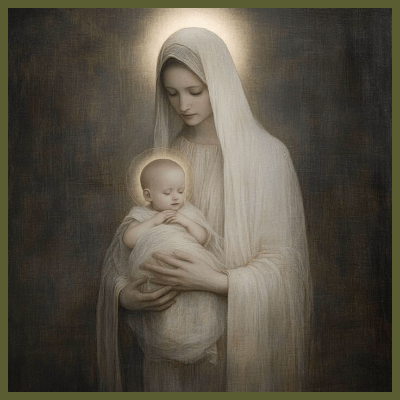
In biblical prophecy, Mary is intimately identified as the virginal and sacred vessel through which the Son of God, referred to as Emmanuel (meaning “God with us”), made His entrance into the world, as foretold in Isaiah 7:14. The Gospel of John (1:14) further emphasizes the significance of this momentous event, affirming that “the Word became flesh and dwelt among us,” indicating that a woman gave birth to a child who is the incarnate God, sustaining the divine connection between heaven and earth.
Mary’s role extends beyond her maternal function; she is depicted in the Book of Revelation (12:1) as an influential and symbolic figure: a woman clothed with the sun, standing on the moon, and crowned with twelve stars. This vivid imagery represents her exalted status among both the faithful and in the heavenly realm, illustrating her integral role in salvation history as prophesied by generations of prophets. Her example of faith, humility, and unwavering trust in God continues to inspire millions of believers, underscoring her significance within both the biblical narrative and contemporary Christian spirituality.
In Revelation 12:1, the imagery of a woman clothed with the sun and the moon under her feet carries rich symbolism, especially when viewed through the lens of Mary’s Immaculate Conception. The Woman Clothed with the Sun represents purity, glory, and divine favor. Being clothed with the sun symbolizes being enveloped in God’s radiance and holiness. For Mary, this can be seen as reflecting her fullness of grace and her being chosen to bear the Son of God, thus highlighting her exalted status within salvation history. The moon often symbolizes the earthly and temporal—representing darkness and the cyclical nature of time. By standing on the moon, the woman signifies her triumph over earthly limitations and sin. In light of the Immaculate Conception, this symbolism emphasizes Mary’s freedom from original sin. Her being untainted by sin allows her to stand above the forces of darkness and to be free from the bonds of human nature.

Ave Maria

 Marian Scripture
Leave a comment