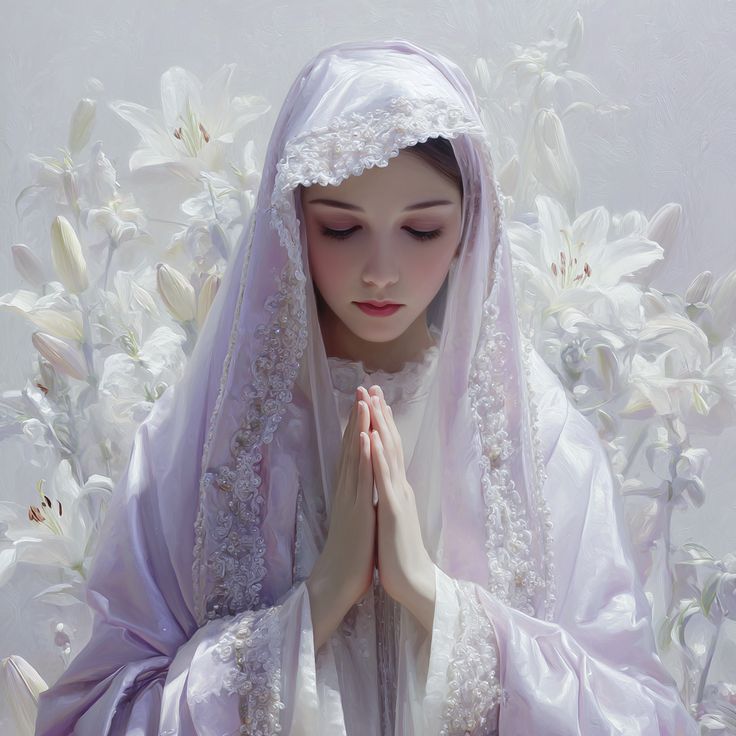
THE IMMACULATE CONCEPTION
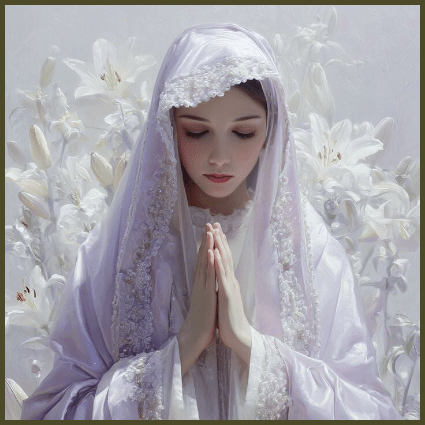
As the lily among thorns
so is my love among the daughters.
Song of Solomon 2, 2
Song of Solomon 2:2, “As the lily among thorns, so is my love among the daughters,” expresses a statement from King Solomon (or the beloved of the Shulamite maiden) that highlights her distinctive purity, beauty, and value, contrasting her with the surrounding “daughters” (other women) who are akin to harsh thorns. This distinction emphasizes her uniqueness and significance in his eyes; a concept often interpreted as Christ’s perspective on the pure Church in a sinful world. It illustrates that even if she perceives herself as ordinary, he views her as extraordinary, a delicate flower that requires nurturing, and presents her as the sole object of his affection.
The phrase “As the lily among thorns, so is my love among the daughters” employs a striking metaphor that vividly conveys the beloved’s unparalleled beauty and exceptional nature. In this evocative imagery, the lily symbolizes purity, elegance, and delicacy, whereas thorns represent the world’s harshness and imperfections.
The Song of Solomon functions as a rich poetic dialogue that celebrates the profound emotions of love and desire while also exalting the beloved’s physical beauty. This passage underscores not only the uniqueness of the beloved spouse but also the contrasting qualities of those around her, highlighting her singular allure amid a backdrop of conventionality.
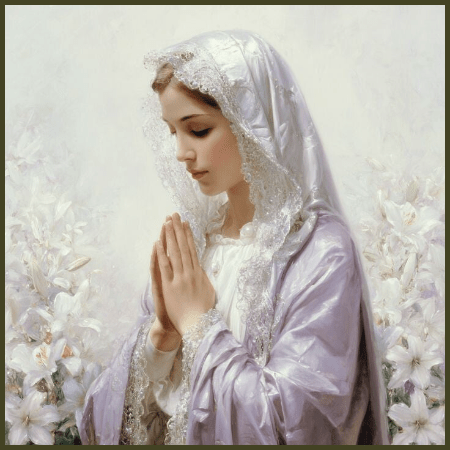
In this poetic verse, the beloved is vividly likened to a lily, a flower traditionally associated with purity, elegance, and breathtaking beauty. The imagery of the lily underscores her exceptional qualities and striking presence, distinguishing her from the surrounding “thorns.” These thorns symbolize the other women or companions who may lack the same grace or allure, representing not only their physical attributes but also the bitterness and hardships that can accompany love and relationships. The contrast between the delicate, soft beauty of the lily and the harsh, jagged nature of thorns underscores the beloved’s rarity and the challenges that can arise in matters of the heart. This juxtaposition invites readers to appreciate the beloved’s profound beauty while acknowledging the complexities and trials that often accompany romantic affection.
This comparison emphasizes the speaker’s profound affection and admiration for their beloved, illustrating that, among all the women, she uniquely captivates him with her extraordinary grace and beauty. The imagery in this verse, reminiscent of much of the Song of Solomon, explores themes of love, adoration, and the celebration of human beauty. It vividly portrays the speaker’s intense emotions and the exceptional significance their beloved holds in their heart, suggesting that her allure extends beyond physical appearance and embodies a deeper emotional and spiritual connection. The verse invites readers to appreciate not only the beloved’s outer beauty but also the profound impact she has on the speaker’s soul, highlighting the intricacies of love and desire.
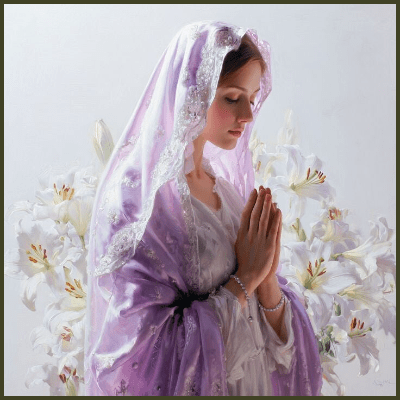
The phrase “As the lily among thorns, so is my love among the daughters” can be interpreted symbolically within the context of the doctrine of Mary’s Immaculate Conception and her role as the New Eve (cf. Genesis 3:15; Luke 1:42).
In this verse, the imagery of the lily serves as a powerful symbol of purity, beauty, and divine grace. The delicate petals of the lily, often associated with innocence and virtue, embody the essence of spiritual and moral perfection. In contrast, the thorns signify humanity’s sinful and fallen nature, representing the struggles, trials, and imperfections inherent in the human experience. This striking duality underscores the beloved’s exceptional nature, who stands out dramatically amid the world’s chaos and flaws.
The doctrine of Mary’s Immaculate Conception further enriches this interpretation, as it holds that she was conceived without original sin, thereby remaining untouched by its ill effects and the blemishes of humanity. This profound belief positions Mary as the epitome of purity, likening her to the flawless lily, and enhances her role as the perfect vessel for Christ. Her seamless embodiment of grace not only sets her apart from others but also underscores her unique contribution to the divine narrative of salvation, as she readily accepted her role in God’s plan without the stain of sin, serving as Eve’s antitype. Through these vivid images, the verse beautifully captures the contrast between human frailty and celestial purity, inviting deeper reflection on the nature of sanctity and divine favor (cf. Luke 1:28, 30).
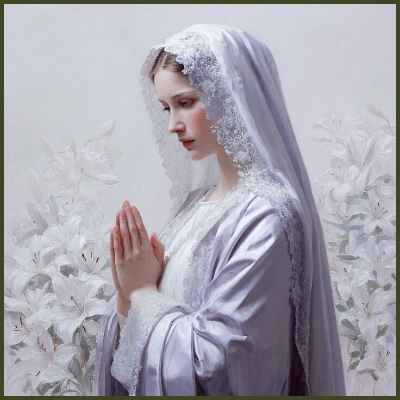
Additionally, Mary is often venerated as the New Eve within Christian theology, serving as a pivotal figure in the grand narrative of redemption. In contrast to Eve, whose choice to disobey God led to the fall of humanity—a moment described in the Genesis account that introduced sin and suffering into the world—Mary embodies profound obedience and unwavering acceptance of God’s divine plan. By willingly consenting to become the mother of Jesus Christ, she exemplifies a deep faith that not only opens the doorway to humanity’s redemption but also solidifies her role as an essential cooperator in the salvation narrative. This theological perspective highlights Mary’s significance in bridging the gap between humanity’s brokenness and the potential for divine grace, illustrating how her acceptance of the angel Gabriel’s message in the Annunciation represents a transformative moment in salvation history. Through her actions, Mary not only counteracts Eve’s disobedience but also symbolizes hope and restoration for all of creation.
The imagery of the lily is particularly poignant, symbolizing not only purity and spiritual elevation but also the divine grace bestowed upon humanity. This delicate flower, with its resplendent white petals, stands in stark contrast to the thorns that represent the suffering and sin introduced by Eve’s original transgression in the Garden of Eden. In this theological framework, Mary emerges as a beacon of hope and a transformative figure—a new beginning for humanity. Her role signifies a path to redemption and liberation from the heavy burdens of sin that have haunted mankind since the fall from grace. Through Mary, believers find the promise of restoration, emphasizing the possibility of spiritual renewal and the triumph of goodness over the darkness of sin.
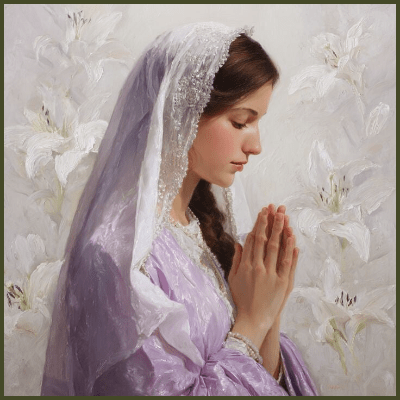
This connection underscores that Mary, like the delicate, unblemished lily, embodies the hope and grace that God extends to a fractured world yearning for healing and restoration. As the epitome of purity and virtue, Mary stands not only as an exemplar of these qualities but also as a powerful testament to God’s unwavering promise of redemption for all of humanity. Embracing her identity as the New Eve, she invites every believer to cultivate a deeper, more intimate relationship with her Son, Jesus Christ, who is the sole source of redemption, capable of restoring the inherent beauty of creation and the hearts of humankind.
Through her loving intercession, Mary encourages the faithful to turn away from sin and return to the sanctifying grace of God, guiding them along the path of holiness. In doing so, she helps foster a renewed commitment to faith, drawing souls closer to God and inspiring them to live lives that reflect His love and light in the world. Her role as a compassionate mother and spiritual guide is vital, serving as a poignant reminder that, through her support and influence, all can aspire to a deeper, richer relationship with the Divine.
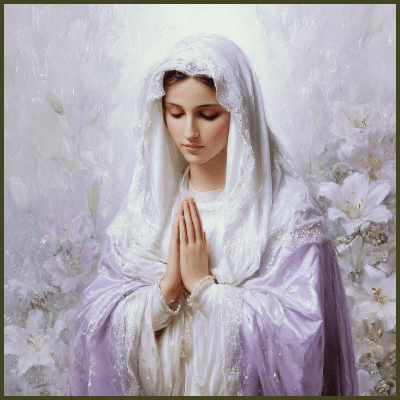
St. Luke presents the Virgin Mary as a sublime and living symbol of the pneumatic Church, often interpreted as the Kingdom of God on earth (Luke 1:42, 46-49). She is depicted as having no “spot or wrinkle,” embodying the characteristics of being “holy and without blemish,” as highlighted in Ephesians 5:27. This portrayal emphasizes her purity and perfection, positioning Mary as a representation of the heavenly Church that reflects the pilgrim Church—composed of believers striving for holiness—here on earth. Mary serves as the ultimate model for all the faithful who have been predestined for divine grace, a foundational concept in theology that underscores the notion of being considered children of God by adoption. This is poignantly expressed in Ephesians 1:3-6, where it is stated that believers are “chosen to be holy and without blemish before Him” in love. This divine selection not only underscores the sanctity attributed to Mary but also illuminates the call to holiness that resonates throughout Christian teachings.
The Protestant theologian Karl Barth rightly stated: “Jesus himself is the kingdom, he was the kingdom, and will be the kingdom, and in him exists the entire establishment, all the salvation, all the joy of the kingdom.” “The identity between Church and kingdom,” Christoph Cardinal Schonborn says, “has its basis in Christ,” yet “there is no higher concretization of this identity for the Church than the Mother of God. It would not be possible to assert this identity if its only basis was Christ, the Head of the Church, and there was no real perfect correspondence on the side of the members of the Church (Mystical Body of Christ) … If Mary did not exist in the Church, then there would be a distance between the Church and the kingdom, because of the presence of sinners in the Church… In Mary, the most perfect member of the Church, we can contemplate the Church’s true nature… ‘As the Mother of Jesus… is the image and the beginning of the Church, which will be perfected in the world to come, so she also shines here on earth in the intermediary time until the day of the Lord comes… as a sign of sure hope and of consolation to the people of God on its pilgrim way’” (Lumen Gentium 58).

Ave Maria

 Marian Scripture
Leave a comment