
MATRIARCH OF THE COVENANT

I will put enmities between thee and the woman, and thy seed and her seed: she shall crush thy head, and thou shalt lie in wait for her heel.
Genesis 3, 15 [DRB]
Then Uzziah said,
Judith, my dear, the Most High God has blessed you more than any other woman on earth. How worthy of praise is the Lord God who created heaven and earth! He guided you as you cut off the head of our deadliest enemy.
Judith 13, 18
When Elizabeth heard Mary’s greeting, the infant leaped in her womb, and Elizabeth, filled with the holy Spirit, cried out in a loud voice and said, “Most blessed are you among women, and blessed is the fruit of your womb… Blessed are you who believed that what was spoken to you by the Lord would be fulfilled.
Luke 1, 41-42, 45 [NABR]
The story of Judith unfolds during a tumultuous period marked by intense conflict between the Israelites and their foreign oppressors, particularly the formidable Assyrians. Amidst this backdrop of violence and oppression, Judith emerges as a striking figure—a devout Jewish widow renowned for her exceptional beauty and unwavering faith. Her tale is one of bravery and resilience, as she defies societal norms and embarks on a daring plan to save her people from impending doom. With cunning and resourcefulness, Judith embodies the spirit of her community, transforming her personal grief into a powerful act of resistance. Her bold actions not only inspire hope but also serve as a poignant reminder of the strength that can be found in faith during times of suffering and despair.
The narrative reflects a critical period in Jewish history, when the Jewish people faced significant and immediate threats to their sovereignty and cultural identity, particularly during the Assyrian Empire’s expansionist campaigns. Known for its formidable military prowess and ruthless tactics, the Assyrian Empire relentlessly sought to conquer and subjugate surrounding states, leaving devastation in its wake. In this context, the story underscores not only the fragility of the Jewish people’s presence in the region but also the enduring power of faith and the possibility of divine intervention. It illustrates how, in moments of despair and apparent hopelessness, belief in a higher purpose can inspire resilience and courage, empowering individuals and communities to stand firm against forces that seek to undermine their existence.

Judith’s character stands out remarkably as she truly embodies agency and strength within a deeply patriarchal society. Her pivotal actions directly challenge the traditional gender roles that often confine women to passive positions. Instead of merely being a bystander, Judith emerges as a courageous heroine who takes decisive action to protect her people from impending doom. Her strategic thinking and resourcefulness are evident as she navigates a dangerous landscape, ultimately taking matters into her own hands. This not only highlights her individual bravery but also serves as an inspiring testament to women’s capacity for leadership and resilience in challenging circumstances.
The excerpt highlights the dramatic moment when Judith successfully assassinates Holofernes, the Assyrian general, a turning point in the narrative that significantly alters the course of events. This act is depicted as divinely inspired, suggesting that Judith is guided by a higher power in her mission to save her people. By luring Holofernes into a false sense of security and ultimately beheading him in his tent, Judith not only demonstrates her cunning and bravery but also orchestrates the downfall of the Assyrian forces. This pivotal scene emphasizes the theme of faith leading to victory, illustrating how a singular act of courage can inspire a collective triumph over oppression. Through Judith’s decisive actions, the narrative underscores the power of belief and divine intervention in overcoming formidable adversities.

Uzziah’s proclamation of praise is significant in illustrating the theological message of the Book of Judith: that God is the ultimate source of strength and deliverance for His people. This proclamation highlights the belief that divine intervention is essential for overcoming adversity. By acknowledging Judith’s actions as being divinely inspired and guided by God, the text emphasizes that His power operates through individuals, empowering them to act courageously in the face of seemingly insurmountable challenges. This illustrates a central theme of the narrative: faith and obedience can lead to miraculous outcomes, reinforcing the notion that God uses ordinary people as instruments of His will.
The passage explores significant themes, such as divine providence, which highlights the belief that a higher power orchestrates the events of the world with a greater plan in mind. It delves into the transformative power of faith, illustrating how unwavering belief can inspire individuals to persevere through challenges and adversities. Furthermore, the text emphasizes the crucial role of individual actions in communal salvation, suggesting that each person’s choices and moral decisions can collectively contribute to the greater good. It encourages readers to recognize and celebrate the myriad ways in which God’s presence and guidance manifest in everyday life, urging a deeper awareness of the divine workings at play within the nation and the world at large.

In Luke 1:41-42, the encounter between Elizabeth and Mary is a significant moment in the New Testament. During this meeting, Elizabeth, who was also pregnant with John the Baptist, feels her unborn child leap within her womb—an action interpreted as a divine recognition of Mary’s unique and sacred role as the mother of Jesus Christ. Elizabeth, inspired and filled with the Holy Spirit, extends a heartfelt blessing to Mary. She acknowledges not only Mary’s unwavering faith but also the miraculous nature of her pregnancy, declaring her to be “most blessed among women.” This encounter highlights the deep spiritual connection between the two women and the fulfillment of God’s promises regarding the births of their children, intertwining their destinies in a powerful way. Elizabeth’s words serve as a prophetic proclamation, underscoring the significance of the events unfolding in their lives and setting the stage for the ministry of both Jesus and John.
The connection can be made to Judith 13:18, which vividly illustrates Judith’s extraordinary bravery and unwavering faith as she plays a pivotal role in delivering the Israelites from the oppressive Assyrians. This particular verse not only underscores the significance of Judith’s courageous actions but also emphasizes the profound impact they had on her community, which celebrated her as a symbol of strength and divine favor. In a similar vein, both Mary and Judith stand out as remarkable exemplars of strong faith within their respective narratives. Each woman embodies resilience and determination, showcasing their vital role in the overarching story of salvation, where their actions serve as beacons of hope and inspiration for their people.
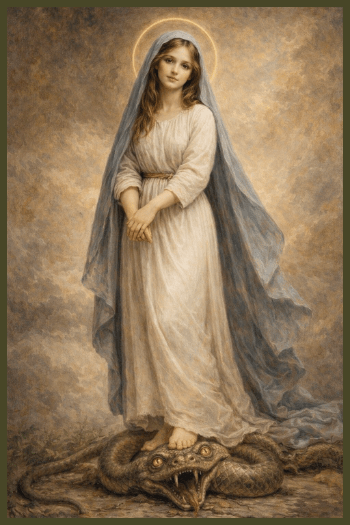
The Virgin Mary occupies a vital role in the salvation narrative of Israel and, by extension, all of humanity, offering refuge from the oppression of sin and death. Her role can be paralleled to that of Judith, a remarkable biblical figure renowned for her unwavering faith and courage in her mission to liberate the Israelites from the Assyrian invaders during a time of dire crisis. In Genesis 3:15, Mary is symbolically portrayed as the one who defeats the serpent, which represents the embodiment of evil and temptation. Through her profound faith and her acceptance of God’s will, she becomes the pivotal instrument through which God’s plan for redemption unfolds, foreshadowing Christ’s incarnation and eventual triumph over sin and death.
Indeed, the parallel between Satan and Holofernes further reinforces this connection. Holofernes, a symbol of tyranny and destruction, represents the physical manifestation of evil that Judith confronts. Similarly, Satan embodies the spiritual adversary seeking to undermine God’s creation and lead humanity astray. In Genesis 3:15, where the prophecy of enmity between the woman and the serpent is introduced, we see a foreshadowing of Mary’s role in the defeat of evil through Jesus. In this context, Judith’s triumph over Holofernes can be seen as a prefigurement of Mary’s role as a mother, leading to the birth of Christ, who conquers sin and death through his sacrifice. Both women stand as examples of faith, strength, and the idea that God can work through seemingly ordinary individuals to achieve extraordinary outcomes. Thus, the narratives of Judith and Mary together create a powerful theme of hope, resilience, and divine victory over evil.
Both women, Mary and Judith, embody powerful themes of salvation and divine intervention, showcasing how unwavering faith can catalyze monumental changes throughout history. Mary, often seen as the epitome of grace and maternal strength, accepts her role as the mother of Jesus, demonstrating immense trust in God’s plan despite the societal challenges she faces. Meanwhile, Judith, with her courageous actions, becomes a symbol of female empowerment, using her intelligence and bravery to save her people from oppression. Their narratives invite believers to reflect deeply on the nature of sacrifice—the personal costs they incur for the greater good—and highlight the profound impact of placing one’s trust in divine guidance during moments of crisis. Through their decisive actions and unwavering faith, both Mary and Judith illuminate the path toward redemption, emphasizing the critical and transformative role that women play in the overarching story of salvation and the hope it brings to humanity.

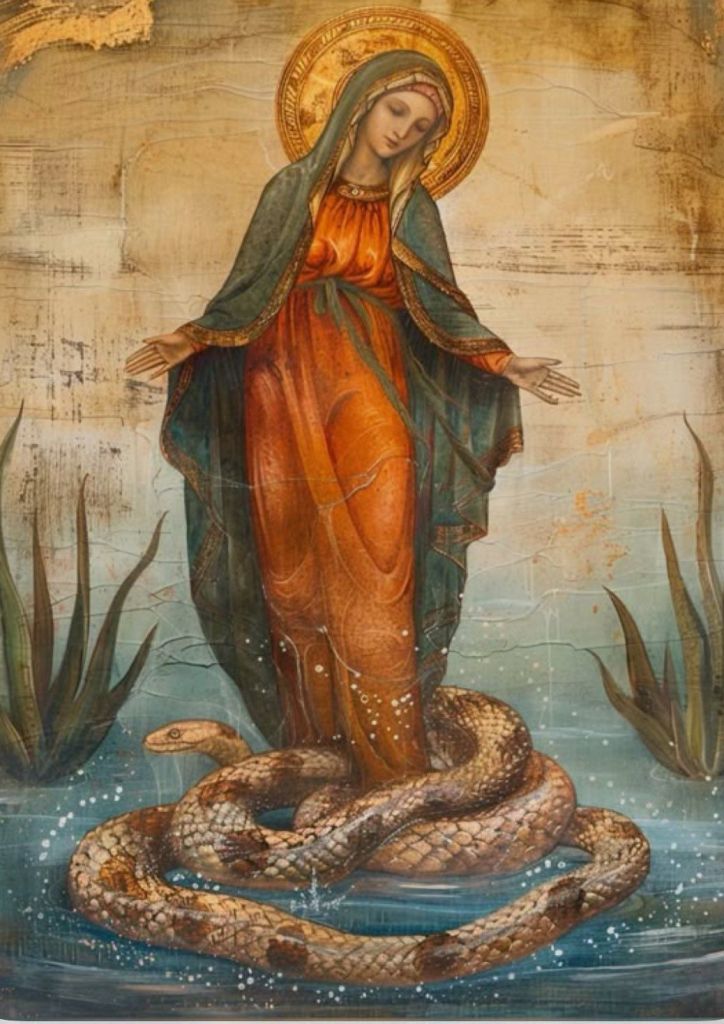
Hence, in the biblical account of Judith, her courageous actions lead to Israel’s miraculous victory over the Assyrians, showcasing not only her bravery but also the divine intervention that followed her faithfulness. Similarly, in the Gospel of Luke, Mary embodies the ultimate vessel of God’s plan of salvation as she carries the Savior, Jesus Christ, within her. Both narratives profoundly underscore the themes of divine purpose and the blessedness bestowed upon those who place their trust in God’s promises.
Judith’s celebrated triumph is a testament to her unwavering faith and strategic prowess, as she devises a bold plan to save her people and ultimately beheads the enemy general Holofernes (Satan’s anti-type). In contrast, Elizabeth’s acknowledgment of Mary as the “mother of my Lord” during their encounter highlights the fulfillment of God’s covenant and the blessedness of belief, reinforcing the miraculous nature of Mary’s virgin conception, by which she crushes the serpent’s head through her faith. These moments reflect how both women, Judith and Mary, serve as pivotal figures in the unfolding narrative of salvation history.
The connection between the two texts highlights the profound continuity of faith throughout the scriptures, showcasing that women have consistently played pivotal roles in God’s redemptive plan. For instance, figures such as Miriam, Deborah, and Mary exemplify how women’s faith, courage, and obedience have significantly shaped the narrative of salvation history. Their stories not only serve as powerful testimonies of divine intervention but also inspire contemporary believers to appreciate the enduring significance of faith and responsive obedience. This reflection encourages modern Christians to recognize the ongoing divine work manifested through those who listen to and act upon God’s word, fostering a deeper understanding of their own roles in the broader tapestry of faith.

Ave Maria

 Marian Scripture
Leave a comment