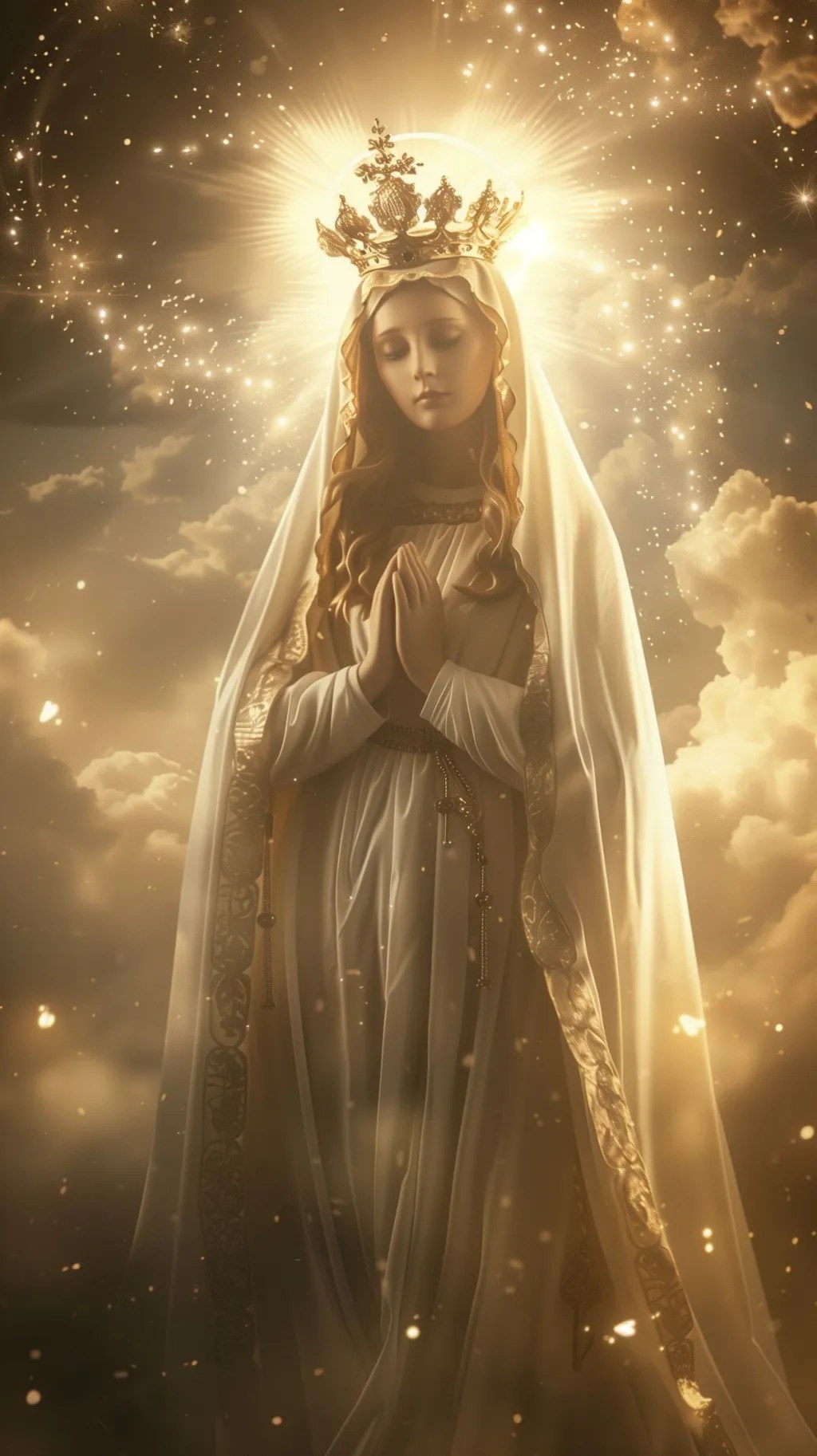
QUEEN OF HEAVEN
My heart is stirred by a noble theme
as I recite my verses for the king;
my tongue is the pen of a skillful writer.
You are the most excellent of men
and your lips have been anointed with grace,
since God has blessed you forever.
Daughters of kings are among your honored women;
at your right hand is the royal bride in gold of Ophir.
Listen, daughter, and pay careful attention.
Forget your people and your father’s house.
Let the king be enthralled by your beauty;
honor him, for he is your lord.
Psalm 45, 1-2, 9-11
Then Bethsabee came to king Solomon, to speak to him for Adonias:
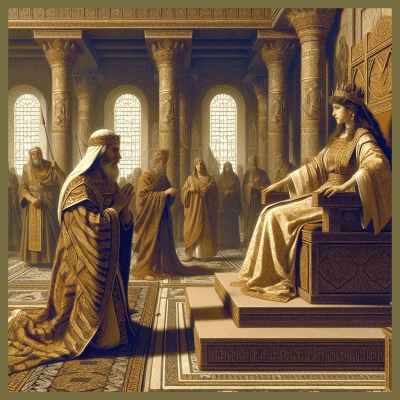
and the king arose to meet her, and bowed to her, and sat down upon
his throne: and a throne was set for the king’s mother, and she sat on
his right hand.
1 Kings 2, 19
“And behold, you will conceive in your womb and bear a son,
and you will name him Jesus. He will be great and will be called
the Son of the Most High, and the Lord God will give to him the
throne of his ancestor David. He will reign over the house of Jacob forever,
and of his kingdom there will be no end.”
Luke 1, 31-33
In ancient Israel, particularly in the kingdom of Judah, the royal house of David maintained a distinct and significant tradition regarding its monarchy. Adjacent to the throne occupied by the king, there was an additional seat explicitly reserved for the king’s mother, known as the Queen Mother. This esteemed position, referred to in Hebrew as the “Great Lady” (Gebirah), symbolized power and respect and embodied a crucial role within the royal family and the broader social structure.
The Queen Mother wielded considerable influence and authority, serving as a key advisor to the king and a vital link between the monarchy and the populace. She was responsible for overseeing domestic affairs and had the final say in decisions related to the royal household, including the management of the harem, which consisted of the king’s wives and concubines. This role was not merely ceremonial; the Gebirah actively participated in political and diplomatic matters, often advocating for the interests of her family and people.
While the king’s wives were primarily entrusted with the critical responsibilities of bearing and raising potential heirs, the Queen Mother held a distinct status that granted her significant respect and recognition. Her influence extended beyond the palace’s confines, as she often acted as a mediator and representative of royal interests in public matters. The position of the Gebirah exemplified the unique balance of power and gender roles in ancient Jewish culture, highlighting the vital contributions of women to governance and society during this period.

The Gebirah, a prominent figure in the royal court, served as a close and trusted adviser to her son, King Solomon, while also acting as a devoted advocate for the welfare of the people. It was a well-established practice that anyone wishing to present a petition or seek an audience with the king was expected to first approach him through his mother, leveraging her influence and patronage to gain access to the throne. This protocol was notably exemplified when Adonijah, Solomon’s half-brother, sought a high-ranking bride and relied on Queen Mother Bathsheba’s intercession to facilitate his request.
In a significant gesture of respect and recognition of his mother’s role, Solomon placed her throne at his right, symbolizing her authority and the esteem she held in both the royal court and the hearts of the people. This act has been interpreted by many Catholics as a prophetic foreshadowing of Mary’s Assumption into Heaven and her Coronation as Queen. In this heavenly realm, she is seen as reigning alongside her divine Son, Jesus Christ, acting as our intercessor and advocate at the right hand of the King in the order of grace, as suggested in the Gospel of Mark 10:40. This profound connection emphasizes the importance of maternal intercession and the honored role of the Queen Mother in both earthly and divine contexts.
Historically, the institution of the Gebirah, or Queen Mother, in the Kingdom of Judah is seen as a precursor to the eternal kingdom that God would ultimately establish. This kingdom, characterized by Christ as the King of kings, is meant to encompass people from every nation on earth. It is reasonable to assert that our Lord and King, Jesus, a descendant of David, would not abolish an office rooted in Divine endorsement, especially one held by His own mother, Mary. The absence of an eternal Queen Mother alongside her royal Son would imply an inevitable imperfection in God’s divine plan, as it seems to lack a vital aspect of the royal hierarchy and intercession.
The significance of the Gebirah can be traced back to the reign of King Solomon, who established this role, which continued to hold importance throughout the Davidic monarchies of the righteous kings of Judah. This role was more than ceremonial; it carried substantial political and spiritual authority, as the Queen Mother often served as an intercessor, advocating for the people’s needs and concerns before the king. The office remained vital until the fall of the southern kingdom of Judah to the Babylonians in 587 B.C., marking a profound shift in the nation’s history and the culmination of the Davidic dynasty’s earthly reign. Thus, what God meticulously prepared in the Old Dispensation was not merely historical; it was a foreshadowing of the fulfillment found in the New Covenant through Christ and His Mother.
God did not promise an uninterrupted monarchy in David’s line but instead affirmed the existence of a continuous line of David’s descendants who would have the rightful claim to his throne. This promise establishes the monarchy’s re-establishment as eternal, culminating in Jesus Christ, who ascends to the throne forever in divine sovereignty. Legally, Jesus could trace his lineage only through Joseph, his adoptive father, since Joseph was not his biological father. However, because Jesus was born of Mary, who was a descendant of David, he could trace his bloodline back to David and thus legitimately claim his royal inheritance as prophesied in Scripture. As noted in Psalm 132:11, “The LORD has sworn in truth to David; he will not turn from it; Of the fruit of your body will I set on your throne.” This verse highlights the divine commitment to establishing David’s lineage (cf. Luke 1:42).
Furthermore, this lineage is a key reason for God’s choice to become incarnate, as articulated in Galatians 4:4: He was “made of a woman.” The necessity of a natural mother in the incarnation underscores the theological significance of the virgin birth, ensuring that Jesus not only fulfills the Davidic lineage but also embodies the fullness of humanity, thereby bridging the divine and human realms. This intricate interplay of legal and biological heritage is pivotal in understanding the nature of Jesus’ kingship and role as the promised Messiah.
The concept of God’s perfect plan is evident in the biblical narrative surrounding King David and his descendants. Despite the northern kingdom’s rejection of Rehoboam, Solomon’s son, and the subsequent destruction of Judah by Nebuchadnezzar, the promise of an eternal dynasty for David remains. This promise reflects the belief in the eventual Messiah and the fulfillment of the Davidic kingdom, which is expected to manifest in the New Dispensation with Jesus as the King and Mary recognized as his Queen Mother. This idea is supported by the scripture found in 2 Samuel 7:8-13.
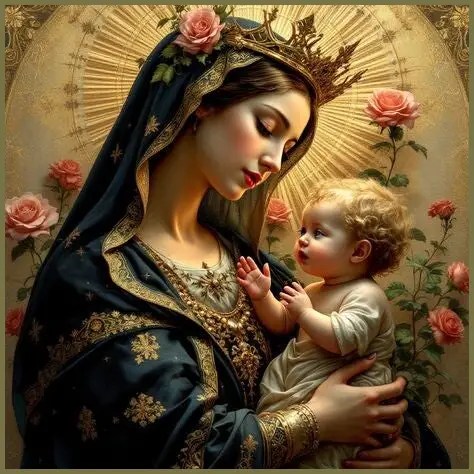
The kingdom of Israel, particularly during the reigns of David and Solomon, when it was united, serves as a symbolic precursor to the kingdom of Heaven. This ideal alignment, however, was disrupted by the failures in leadership characterized by wickedness and injustice. As a result, King Jehoiachin and Queen Mother Nehusta lost their crowns and were taken into exile by Nebuchadnezzar, along with the high-ranking officials and defeated warriors of Judah (Jeremiah 13:18; 22:24-26). Following this, King Zedekiah’s reign, which represented the kingdom’s lowest and poorest remnants, ended dramatically due to his own immoral actions. His downfall was accompanied by the loss of his mother, Queen Hamital, and his crown during the Babylonian conquest that followed Zedekiah’s rebellion against the Babylonian king (2 Kings 24:12-24).
God’s promise to David is fulfilled in Jesus, the son of Mary, as articulated in the Gospel of Luke: “And behold, you will conceive in your womb and bear a son, and you shall name Him Jesus. He will be great and will be called the Son of the Highest, and the Lord God will give Him the throne of His father David” (Luke 1:31-32). Additionally, the acknowledgment of Mary is emphasized when she is greeted with the words, “Blessed are you among women, and blessed is the fruit of your womb!” (Luke 1:42). Furthermore, Jesus is described as being “made of the seed of David according to the flesh” (Romans 1:3). His resurrection is reaffirmed with the statement, “Remember that Jesus Christ rose from the dead and was descended from David” (2 Timothy 2:8). It is important to note that the lineage of Jesus is traced through his mother, Mary, who contributes all necessary genetic material to establish his bloodline. His blood mixed with his mother’s royal blood in her womb.
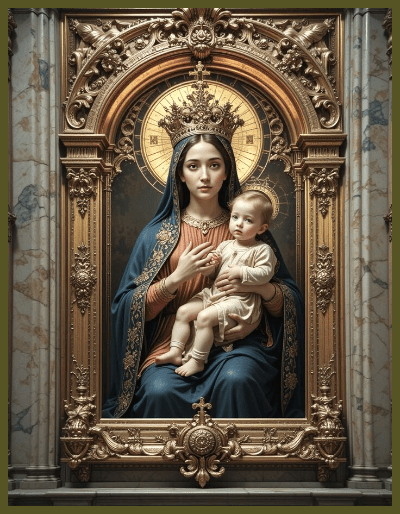
The genealogy of Jesus presented in the Gospel of Luke differs significantly from that in the Gospel of Matthew. Luke’s account is particularly aimed at Gentile audiences who were not bound by the Mosaic Law. In Jewish tradition, genealogies were typically traced through male lineage, as established by the law. For instance, the Book of Numbers states, “So, Moses and Aaron took these men designated and assembled the whole community on the first day of the second month. Every man of twenty years or more declared his name and lineage according to clan and ancestral house” (Numbers 1:17-18). This practice underscores the importance of paternal lineage in Jewish society.
In Luke 3:23-38, the genealogy of Jesus traces it back through significant figures, beginning with Jesus, then through David, to Judah, and ultimately to Adam and God. Notably, Luke identifies David’s descendant as Nathan (verse 31), in contrast to Matthew, who lists Solomon. This distinction suggests that Luke’s genealogy traces the lineage through Mary rather than Joseph, as it follows a different ancestral line. The passage begins with the statement about Jesus: “And Jesus himself was beginning about the age of thirty years; being (as it was supposed) the son of Joseph, who was of Heli [Eli], who was of Matthat” (Luke 3:23).
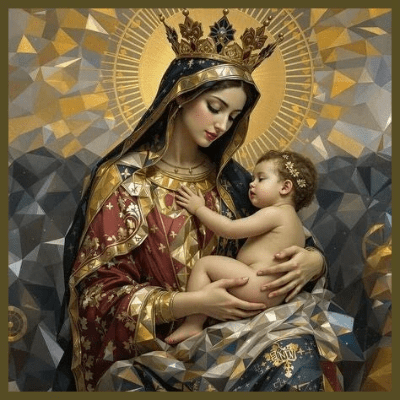
This passage raises an interesting question regarding the genealogies presented in the Gospels of Matthew and Luke. While Matthew identifies Joseph as the son of Jacob, Luke states that Joseph is the son of Heli (also known as Eli). This apparent contradiction suggests a deeper understanding of Jesus’ ancestral lines. One plausible explanation is that Heli may refer to Mary’s father, making him Jesus’s biological grandfather and Joseph’s father-in-law. Although Mary’s name is not explicitly mentioned in the genealogy, it is reasonable to infer her inclusion based on Jewish customs and legal practices of the time. The Greek term “as it was supposed” (nomizo, “to hold by custom or usage”) supports the idea that the lineage tracing reflects these cultural norms. This interpretation allows the genealogical accounts to be harmonized without contradicting each other.
Since it was customary to trace a son’s lineage through his father, God chose Joseph to be Mary’s husband and the earthly father of Jesus. Mary could marry Joseph because it was also customary for individuals from the same tribe to wed (Numbers 36:6-7). Luke traces Jesus’ genealogy back to God through David and Adam, making it appropriate to designate Mary not only as the Mother of God but also as the Queen Mother of God’s heavenly kingdom, due to her royal bloodline, which Jesus, our Lord and King, received through her.
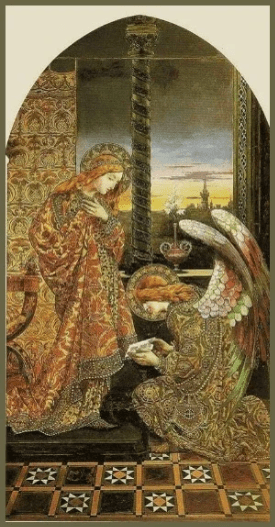
And the angel being come in, said unto her:
Hail, full of grace, the Lord is with thee:
blessed art thou among women.
Luke 1, 28 {DRB}
The angel Gabriel acknowledged Mary’s royal dignity with a profound gesture, likely greeting her with a respectful genuflection—a physical manifestation of reverence and awe. In the Greek text, his salutation, “chaire kecharitomene,” may translate to “Hail, O favored one by grace.” This phrase is deeply significant; in ancient Greek culture, the term “Hail” (χαιρε/chaire) was not merely a common greeting, but a formal expression reserved for royalty, reflecting deep loyalty and allegiance to those of noble status.
Such a salutation carries immense theological significance, as it implies that Mary is honored as the most blessed among women and has been bestowed with lasting divine grace, setting her apart as the mother of our Lord Jesus Christ. Notably, this particular expression appears only once more in the New Testament, during an episode of mockery by Roman soldiers. They taunt Jesus by placing a crown of thorns on His head and a reed in His hand, proclaiming, “Hail, King of the Jews!” (χαιρε, βασιλεῦ τῶν Ἰουδαίων, John 19:3), highlighting a stark contrast between the reverence Mary receives and the derision Jesus endures.
Gabriel’s greeting thus celebrates Mary’s unparalleled role in salvation history and emphasizes that she is not only the mother of our Lord but also the Queen of Angels, a title that immortalizes her significance in the Christian tradition. This duality of honor—elevating both Mary and Jesus—underlines the divine plan in which Mary is chosen to give birth to the Messiah, reinforcing her place not just in the earthly realm but also in the heavenly hierarchy.
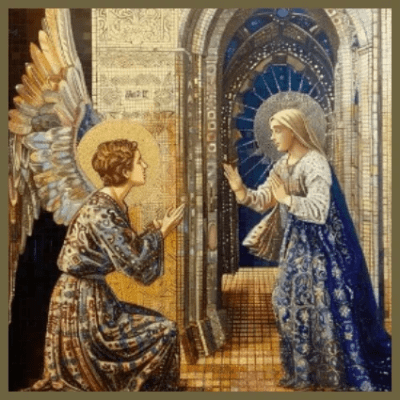
In ancient Jewish tradition, Sarah is often regarded as a prefiguration of the Gebirah, or Queen Mother, of the Kingdom of Judah. Originally named Sarai, God instructed Abraham to change his wife’s name to Sarah to signify her elevated status (Genesis 17:15-16). In ancient Hebrew, the name Sarai translates to “princess,” while Sarah means “exalted princess.” This distinction highlights the transformation from a mere princess to a queen, a status marked by greater dignity and authority.
Just as God commanded Abraham to no longer call his wife Sarai, recognizing her role as the mother of Isaac and the Matriarch of the Covenant between God and Israel, it is fitting that the angel Gabriel addressed Mary not by her given name but rather by emphasizing her perfect and perpetual state of grace. In the Gospel of Luke, the angel addresses her as “kecharitomene,” a female vocative implying “full of grace.” This title signifies not only her unique role but also her divine favor, underscoring her predestined purpose.
Mary’s role as the royal mother of our Lord and King, Jesus, who is prefigured by Isaac in the near-sacrifice story (Genesis 22:2), further establishes her significance. As the Matriarch of the New Covenant, Mary embodies the fulfillment of the promises made to Sarah, signifying her vital place in the Divine order of redemption. In this narrative, Sarah’s legacy is realized through Mary, who is seen as the Mother of all nations, destined to give birth to a royal Son who shall rule all nations with a “scepter of justice” (Psalm 2:9; Revelation 2:27). This connection reinforces the continuity between the two women and underscores their pivotal roles in God’s redemptive plan throughout biblical history.
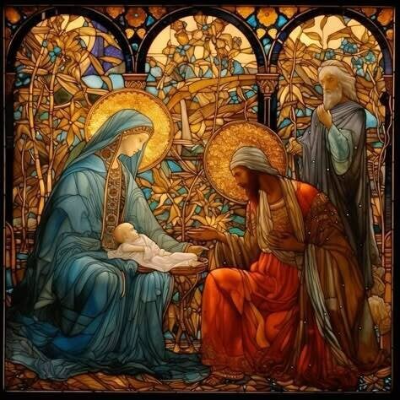
They were overjoyed at seeing the star,
and on entering the house,
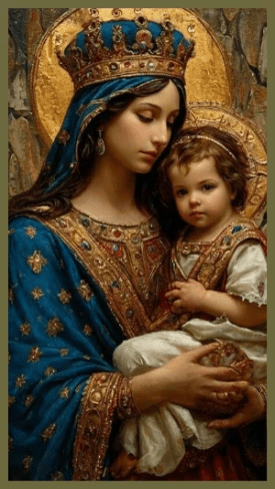
they saw the child with his mother Mary.
Then they prostrated themselves and did him homage.
Matthew 2, 10-11
In the early Church, Judeo-Christians viewed Mary as a Gebirah, a queen associated with the Davidic royal lineage. They recognized her Divine Maternity as the final fulfillment of this tradition, referencing Scripture such as Luke 1:31-33 and 1:35. St. Matthew further reinforces this continuity between Jewish tradition and the New Dispensation by highlighting that Mary, the mother of Jesus, was present when kings from distant lands came to pay homage and offer gifts to her Son. Additionally, upon his announcement to Mary, the archangel Gabriel conveyed the message, “The Lord is with you” (Luke 1:28). This relationship underscores the close connection between Mary and Jesus in the Kingdom of Heaven, underscoring their shared royal heritage.
Matthew’s narrative underscores a profound theological principle: that anyone, regardless of status—whether a royal figure or commoner—who seeks an audience with the King must do so in the presence of the Queen Mother. This insistence on the Queen Mother’s presence is not merely a ceremonial formality; it symbolizes the vital connection between the royal line and maternal authority. Throughout the Gospels, every phrase is laden with significance, and the deliberate use of the term “mother of Jesus” transcends mere narrative embellishment. Instead, it serves to illuminate the depth and importance of their relationship.
Mary’s role as Jesus’ mother is not only historical but also steeped in eschatological significance, pointing towards a greater spiritual reality. By affirming this maternal bond, the Gospel narrative aligns with the early Christian community’s beliefs, which were deeply rooted in their Judaic heritage. This belief is particularly evident in the veneration of Mary, who was divinely chosen to bear the Messiah, thereby establishing her as an integral figure in His redemptive mission.
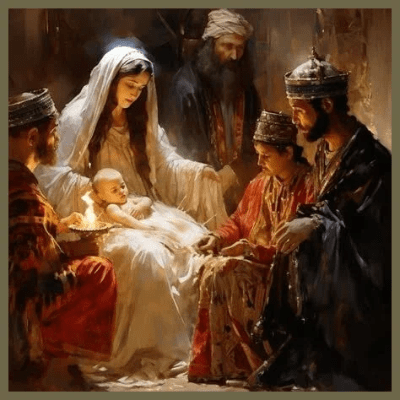
This narrative presents a royal lineage involving key characters, with a particular focus on Mary, who is integral to Jesus’ claim to his royal heritage. Mary serves as the guarantor of her son’s rightful inheritance to the throne of King David, a fact that underscores her significance over Joseph, whose presence is notably not mentioned. The Gospel of Matthew emphasizes the unique role of the Virgin Mary; her maternal figure symbolizes the esteemed royal office she holds as an instrument of God’s grace within His heavenly kingdom, as well as the divine nature of the child she bears.
Interestingly, within the pages of the Gospel of Luke, we encounter the shepherds who “came with haste; and they found Mary and Joseph (not to be confused with “Mary, the mother of Jesus”), and the child lying in the manger” (Luke 2:16). Unlike the regal and majestic figures of the Magi, the shepherds were humble and common folk, which eliminates the necessity for Luke to allude to Mary’s royal identity as the mother of Jesus. Theophilus, the recipient of Luke’s narrative, was already aware that Mary bore the title of the Messiah’s mother. However, it was vital for him to grasp that Mary represented much more than just the biological mother of our Lord and King. In another significant moment, John characterizes her as ‘the mother of Jesus’ during his account of the Wedding at Cana (John 2:1-11), highlighting her essential intermediary role in the unfolding of her Son’s grand redemptive mission.
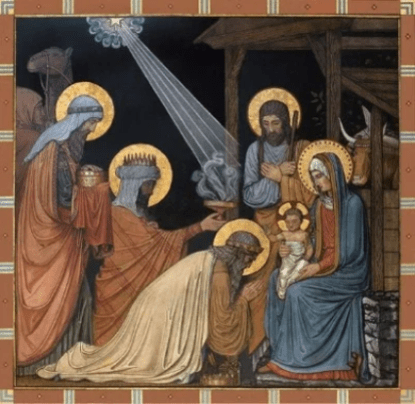
Matthew emphasizes that the Virgin Mary serves as a significant sign of the restoration of the Davidic Kingdom through her role as the mother of the promised Messiah-King, as prophesied in the Scriptures (Isaiah 7:14, 11:1; Micah 5:1-3; Jeremiah 31:22). Being Jewish, Matthew would have been familiar with the symbolism associated with royal authority, particularly the role of the Queen Mother. Traditionally, the Queen Mother’s status was signified by her crown and by her position beside the King in the royal court, a practice dating back to the time of Solomon and integral to the continuation of the Davidic dynasty.
Historically, the fates of the King and the Queen Mother were closely linked. The ascension of a King to the throne was directly tied to his mother’s identity, underscoring their mutual reliance on one another for legitimacy and security. In instances where an external power threatened the throne, both the King and the Queen Mother faced grave risks (1 Kings 1:21). Furthermore, if the King were exiled, his Queen Mother and the entire royal court would be compelled to follow him into exile (2 Kings 24:12; Jeremiah 13:18, 22:26, 29:2). This intricate relationship highlights the importance of the Queen Mother in the royal lineage and governance.
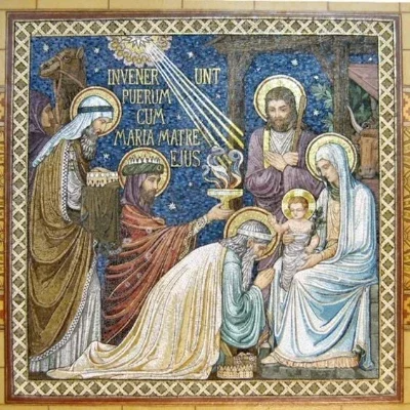
After the Jews of the Southern Kingdom were freed from captivity and restored as a nation, many male descendants of David emerged. However, none of them could legitimately inherit the throne of David and continue his dynasty, as there was no Queen Mother to validate his Davidic kingship. God had sworn an oath to David that the fruit of his lineage would inherit his throne forever. This promise is fulfilled with the coming of the Messiah, King. The legitimacy of the Davidic throne could only be assured if David’s mother held the title of Gebirah. Thus, Matthew implicitly affirms the historical truth that the Blessed Virgin Mary is the Queen Mother of the Messiah, King Jesus, by giving birth to Him. Jesus fulfills the prophecies regarding the restoration of the Davidic dynasty and kingdom as the Son of David, the fruit of her womb.
Mary’s destiny is deeply intertwined with that of her Son, Jesus. Following the ascension of the Messiah King into heaven, where he took his place at the right hand of God, Mary was also believed to have been assumed into heaven, both body and soul, through divine power after her earthly life. In her heavenly role, Mary is recognized as the Queen Mother, symbolizing her Son’s rightful claim to the throne of David within his eternal royal court. Additionally, she acts as an intercessor and Mediatrix of Grace for the faithful while reigning alongside her Son in the order of grace (cf. 2 Timothy 2:12).
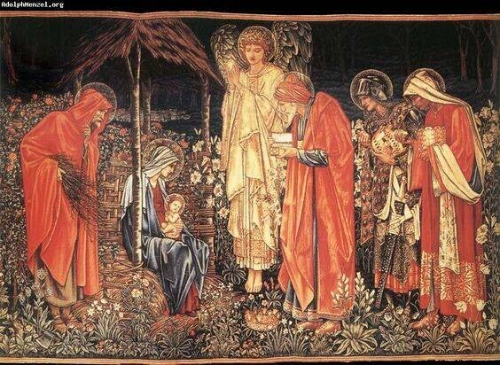
The Jewish community, recognized as the first to accept the Christian faith, acknowledged Mary’s significant role as the mother of Jesus Christ, who is descended from the line of David. This recognition illustrates her royal dignity and the esteemed privileges she holds. The reverence they maintained for Mary following her Dormition and subsequent Assumption into heaven is evident in the words of her relative, Elizabeth, who expressed surprise and honor at Mary’s visit, asking, “Whence is this to me, that the mother of my Lord should come to me?” (Luke 1:43-44). This passage highlights Mary’s role as a mediator, as seen when the unborn John the Baptist reacts joyfully to her presence, underscoring her influence. In Judean culture, it was common to refer to the Queen Mother as the “mother of my Lord” (Lord and King) when seeking her intercession for favors from her son, reinforcing her importance in the faith and community. This practice is reminiscent of biblical references, such as in 2 Samuel 24:21.
The Blessed Virgin Mary’s role as an advocate and mediator of grace in the Kingdom of Heaven is viewed as a special privilege she holds by her maternal rights. Early Christians must have felt deeply honored to know that the mother of Jesus was attentive to their spiritual needs from her heavenly position. This private devotion to Mary flourished in the early Church and spread throughout the Roman and Greek world, becoming a significant aspect of Catholic belief.
Early Christians frequently turned to Mary for assistance and intercession amid persecution. Many sought solace in her Immaculate Heart, praying to her while standing before her heavenly throne, which was situated alongside her Son’s throne of grace. As persecution intensified and martyrs emerged, the Church grew, ultimately becoming resilient enough to outlast the Roman Empire, significantly aided by the intercession of the Queen of Heaven and the Martyrs, as indicated in the extant document Sub Tuum Praesidium (c.250 AD).
‘Under your mercy we take refuge, O Mother of God.
Do not reject our supplications in necessity,
but deliver us from danger,
O, you alone pure and alone blessed.’
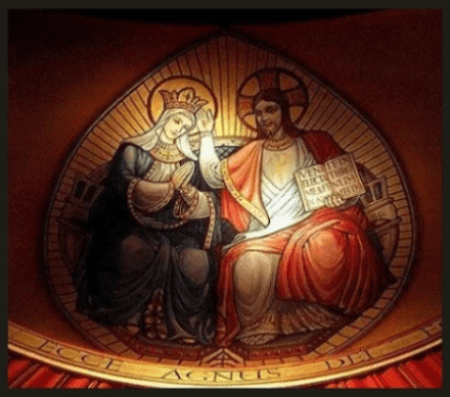
Gird your sword upon your hip, mighty warrior!
In splendor and majesty ride on triumphant!
In the cause of truth, meekness, and justice
may your right hand show your wondrous deeds.
Your arrows are sharp;
peoples will cower at your feet;
the king’s enemies will lose heart.
Your throne, O God, stands forever;
the king’s enemies will lose heart.
Your throne, O God, stands forever;
your royal sceptre is a sceptre for justice.
You love justice and hate wrongdoing;
therefore God, your God, has anointed you
with the oil of gladness above your fellow kings.
Psalm 45, 4-8
Solomon is notable for being the first king to elevate his mother, Bathsheba, to a significant position in his kingdom’s administration. He inherited the throne from his father, King David, who established his royal lineage through divine appointment rather than through maternal inheritance. Unlike Solomon, David did not have a Queen Mother, as he did not ascend the throne by hereditary succession; instead, his kingship was bestowed upon him by God in anticipation of the Messiah, as outlined in 2 Samuel 5:1-4. However, David made a crucial promise to Bathsheba that their son Solomon would succeed him as king, overriding the claims of Adonijah, the son of his other wife, Abishag the Shunammite (1 Kings 1:28-31). By ensuring Solomon’s ascent to the throne, he reinforced the royal lineage, positioning Bathsheba as a key figure in legitimizing Solomon’s rule.
After the Jews were freed from captivity in Babylon and re-established as a nation in Palestine, the matriarchal figure known as the Queen Mother, or Gebirah, was no longer present in the royal lineage. This was significant because, despite the interruption in the line of Davidic kings, the office of the Queen Mother could be restored only through divine intervention if the dynasty was to continue, with the Messiah inheriting David’s throne. While Jesus could reign over a heavenly kingdom, his connection to the House of David was essential for establishing a lasting dynasty. Thus, the role of the Virgin Mary as the Queen Mother became crucial, as she embodies the fulfillment of prophetic signs regarding the restoration of the Davidic kingdom.

The Hebrew Bible does not specify David’s mother’s name, but ancient Jewish tradition documented in the Talmud (Baba Bathra 91a) identifies her as Nitzevet (or Nisbeth), the daughter of Adael. The name Nitzevet is derived from the Hebrew word “nitzav,” meaning “to stand.” This is reflected in the Hebrew Bible passage: “For, behold, we were binding sheaves in the field, and, lo, my sheaf rose [nitzbat] upright; and behold, your sheaves stood round about, and made obeisance to my sheaf” (Genesis 37:7). Throughout David’s reign, Nitzevet was a steadfast presence, accompanying her son to his coronation and providing support and guidance during his challenges. Her dedication exemplified maternal loyalty, as she remained by his side during turbulent times, serving as an early model for queens in the monarchy. Nitzevet’s name also symbolizes the respect with which the king’s mothers were regarded among the king’s wives, particularly within the evolving royal structures established during Solomon’s rule.
As noted, in the kingdom of Judah, the roles of the king’s wives differed significantly from those of the Gebirah, or queen mother. While the wives were primarily responsible for bearing and raising the king’s children—especially his potential heirs—the Gebirah held a more influential position. As the most important woman in the kingdom, she had significant sway over her son, the king, surpassing the combined influence of all his wives. This dynamic illustrates the hierarchy within the royal family. This historical context is also reflected in the Christian tradition, which regards the Virgin Mary as the Blessed Queen of Heaven. According to this tradition, she serves a vital role in Heaven as the Advocatrix and Mediatrix of all saving grace, continuing her intercessory work alongside the throne of grace. This understanding emphasizes her importance and influence within God’s heavenly kingdom.
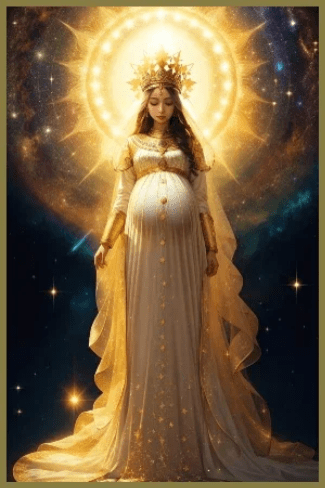
A great sign appeared in heaven: a woman clothed with the sun,
with the moon under her feet and a crown of twelve stars on her head.
She was pregnant and cried out in pain as she was about to give birth…
The dragon stood in front of the woman who was about to give birth
so that it might devour her child the moment he was born. She gave birth
to a son, a male child, who “will rule all the nations with an iron scepter.”
And her child was snatched up to God and to his throne.
Revelation 12, 1-5
The “great sign” or “Great Lady” described by John’s vision in heaven represents the restoration of the Davidic Messianic kingdom, embodied in the figure of the Blessed Virgin Mary, who gives birth to the Messiah King. The Nativity of Christ aligns with the fulfillment of various Old Testament prophetic signs regarding this Restoration. The child born to this woman in the Book of Revelation is identified as the Messiah King, indicating that she must have been historically and literally recognized as the Virgin Mary. Moreover, from an allegorical viewpoint, this woman may symbolize both Israel and the Church (Revelation 12:5; Psalm 2:9). A notable aspect of this vision is the woman’s crowning, as she is the mother of a male child destined to “rule all nations with a rod of iron.” In the ancient Davidic kingdom, the only other member of the royal court to receive a crown alongside the king was the Queen Mother, who held a prominent role alongside him on the throne.
The Queen Mother in John’s vision serves as a genuine, tangible, and biological representation of the Davidic King’s royal lineage. Similar to the figures of the Child (Jesus) and the Dragon (Satan), the woman (Mary) is not merely a corporate symbol; she is a personal and authentic entity. This is evident not only in Revelation 12 but also in Genesis 3:15, which is recognized as the first Messianic prophecy. The phrase “a great sign appeared in heaven” can be interpreted as meaning that the Blessed Virgin Mary is present in heaven, body and soul, as the Gebirah (“Great Lady”) of the New Dispensation. This event symbolizes the prophetic sign of the restoration of the Davidic kingdom through her role in giving birth to the Messiah-King, as foretold in Isaiah 7:14.
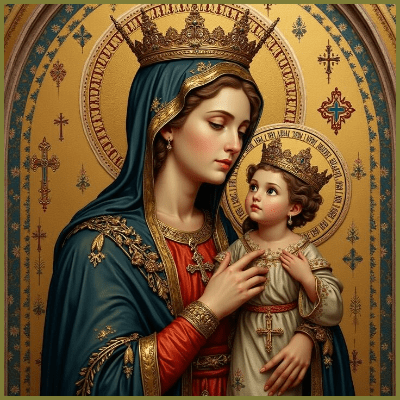
Mary played a significant role in the Christian narrative, giving birth to Jesus both literally and historically in Bethlehem, as referenced in Isaiah 66:7-9, and figuratively experiencing sorrow during His crucifixion at Calvary, in line with scriptures such as Jeremiah 4:10. After His crucifixion, Jesus rose from the dead and ascended into heaven, where He took His place at the right hand of God, solidifying the royal authority of the male child mentioned in Revelation 12:5 and 10. Gary G. Michuta, in his book Making Sense of Mary (Sophia, 2008), highlights that during His public ministry, Jesus indicated that Calvary would serve as the site of judgment for the “prince of this world,” referring to the Devil, who would be cast out of heaven, while Jesus Himself would be “lifted up” (John 12:31-33; Revelation 12:9, 12). The ascension marked Jesus’s eternal enthronement as King in the kingdom of heaven. Given that the fortunes of the King and His Queen Mother, Mary, are intertwined, she, too, is believed to have been raised into heaven, body and soul, through her glorious Assumption, where she shares a royal place at the right hand of her Son.
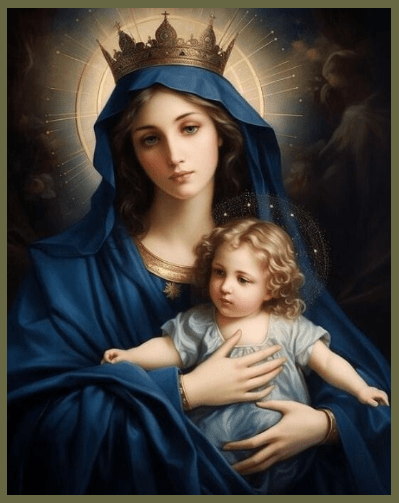
The doctrine of the Queenship of the Blessed Virgin Mary holds that Mary has an exceptionally elevated position in heaven, marked by her royal crown. According to this perspective, Mary’s throne is situated alongside that of her Son, Jesus Christ, which is essential for the restoration of the Davidic monarchy and kingdom. This connection is tied to God’s promise to David’s wife, Bathsheba. The theology surrounding Mary’s role is further supported by Scripture, particularly in the passage from the Song of Solomon 3:11, which describes a scene where King Solomon is crowned by his mother: “Go forth, ye daughters of Zion, and see King Solomon in the diadem wherewith his mother crowned him in the day of his espousals.” This imagery is often interpreted as foreshadowing Mary’s role in the divine plan, reinforcing the belief in her Queenship and in Christ’s eternal claim to the throne of David through the Divine Maternity.
“But you, Bethlehem Ephrathah, though you are small among the
clans of Judah, out of you will come for me one who will be ruler over
Israel, whose origins are from of old, from ancient times.” Therefore,
Israel will be abandoned until the time when she who is in labor bears
a son, and the rest of his brothers return to join the Israelites.
Micah 5, 1-3

SALVE REGINA CAELI
Patristic testimony
St. Ephraim of Syria, Prayer to the Immaculate Queen (ante A.D. 373)
St. Theodotus of Ancyra, Homily 4:3 (ante A.D. 446)
St. Theoteknos of Livias, Assumption, 291 (ante. 560 AD)
St. Modestus of Jerusalem, Dormition of the Most Holy Mother of God (ante A.D. 634)
St. John of Damascus, An Exposition of the Orthodox Faith, 4:14 (ante A.D. 749)

 Marian Scripture
Leave a comment