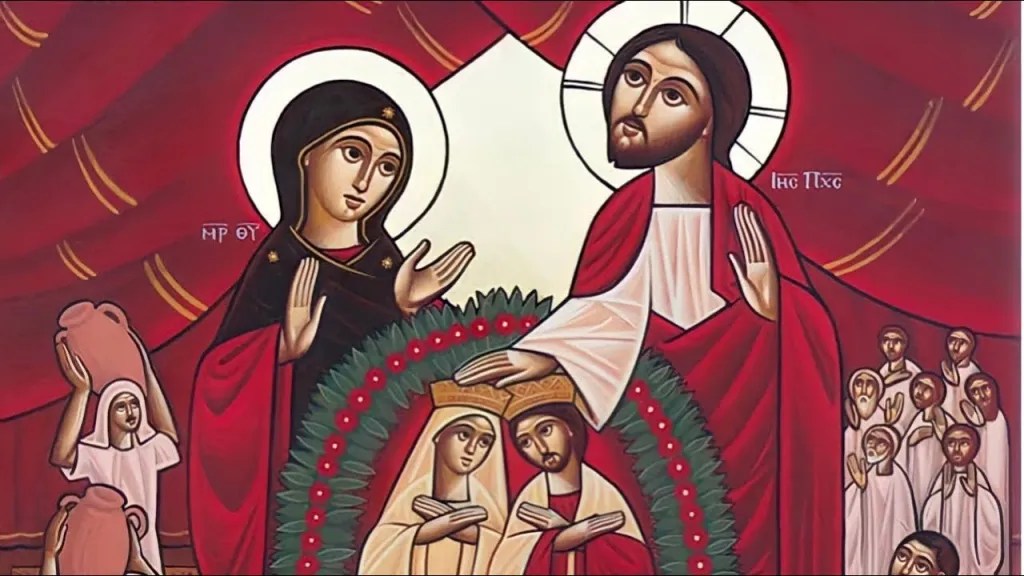
MEDIATRIX OF GRACE
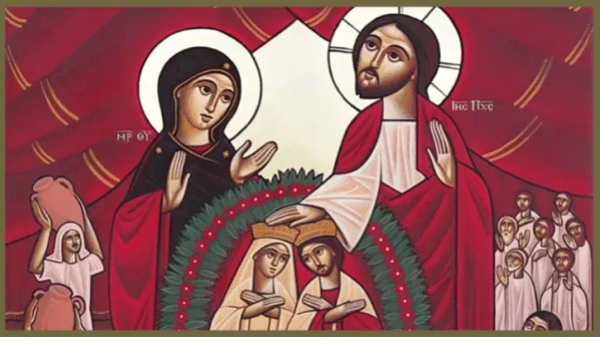
In that day I will raise up the booth of David that is fallen…
the mountains shall drip sweet wine,
and all the hills will flow with it.
Amos 9, 11, 13
And in that day the mountains shall drip sweet wine…
and all the stream beds of Judah shall flow with water;
and a fountain shall come forth from the house of the Lord.
Joel 3, 1
AND the third day, there was a marriage in Cana of Galilee: and the mother of Jesus
was there. And Jesus also was invited, and his disciples, to the marriage. And the wine
failing, the mother of Jesus saith to him: They have no wine. And Jesus saith to her:
Woman, what is that to me and to thee? my hour is not yet come. His mother saith to the
waiters: Whatsoever he shall say to you, do ye. Now there were set there six water-pots of stone, according to the manner of the purifying of the Jews, containing two or three
measures apiece. Jesus saith to them: Fill the water-pots with water. And they filled them
up to the brim. And Jesus saith to them: Draw out now, and carry to the chief steward of
the feast. And they carried it. And when the chief steward had tasted the water made wine, and knew not whence it was, but the waiters knew who had drawn the water; the chief steward calleth the bridegroom, And saith to him: Every man at first setteth forth good wine, and when men have well drunk, then that which is worse. But thou hast kept the good wine until now. And saith to him: Every man at first setteth forth good wine, and when men have well drunk, then that which is worse. But thou hast kept the good wine until now.
John 2, 1-11
And the wine failing, the mother of Jesus saith to him:
They have no wine.
Catholics hold the belief that Jesus Christ serves as the sole Mediator between God and humanity, as indicated in 1 Timothy 2:5. This concept underscores that Jesus is responsible for redeeming the world and reconciling all of humanity to God by offering his life as a ransom for sin, highlighted in 1 Timothy 2:6. While Jesus is recognized as the principal mediator in his human experience, this does not exclude the faithful from playing a role in mediation or intercession. Believers are encouraged to pray and make sacrifices with the intention of salvation for all and to promote knowledge of the truth, a theme found in 1 Timothy 2:1-4.
The concept of mediation in salvation within Christianity is rooted in the belief that Jesus is the primary mediator. However, it is essential to recognize that Christians are also called to actively participate in this mediation as members of His Mystical Body. This role is bestowed upon them as adopted children of God, allowing them to partake in Christ’s divine nature, as referenced in 1 Peter 2:5 and 2 Peter 1:3-4.
In his role as the head of His Mystical Body, Christ intercedes on behalf of humanity not from his divine nature, but through his humanity. The Letter to the Hebrews elaborates on this, describing Christ as our High Priest who intercedes for us perpetually in the heavenly sanctuary. This intercession continually presents His sacrifice on Calvary, foreshadowed at the Last Supper and re-presented at the Holy Sacrifice of the Mass. Through this ongoing process, daily sins are atoned for, emphasizing the connection between Christ’s sacrifice and the spiritual life of believers.
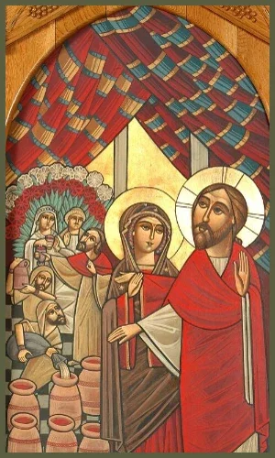
Exegete Manuel Miguens highlights that verse 5, when translated from Greek, conveys the message: “There is one and the same God for all, and there is one and the same mediator for all.” This interpretation underscores that both Jews and Gentiles are recipients of the Father’s merciful love and the Son’s obedient act of atonement. The Greek term used for “one” in this verse is heis (εἷς), which suggests a “sameness of function,” indicating commonality or universality. In other words, Jesus is the ‘one and the same mediator’ for the Jews and Gentiles. This choice of words is significant. Had the Apostle Paul intended to imply that there is only one mediator in the entirety of salvation’s framework, he would have likely used the term monos (μόνος). This word suggests “only” in the context of exclusive uniqueness rather than indicating a shared function.
In discussions of salvation, Paul highlights Jesus as the primary mediator between God and humanity, encompassing both Jews and Gentiles. Jesus’s role as the mediator is rooted in His unique ability to redeem all of humanity from sin and death (V. 6). Unlike any other individual, Jesus intercedes for us before God, leveraging His divine nature and equal status with the Father. It is essential to understand that while individuals are encouraged to intercede for others (vv. 1-4), particularly through the sacrament of baptism, their role is secondary and supportive. This intercessory participation is realized as members of Christ’s Mystical Body, relying on His merits in strict justice to fulfill this calling.
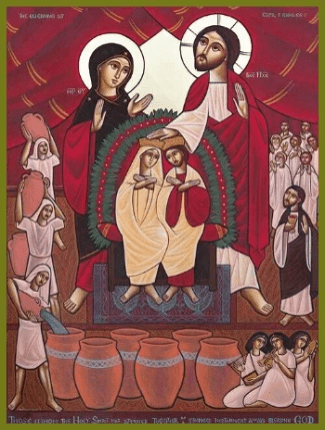
In the Old Testament, Moses played a crucial role as the mediator of the covenant between God and the Israelites. This foundational agreement, which established the relationship between God and His chosen people, finds its ultimate fulfillment in the New Testament through Jesus Christ. By His sacrificial death and resurrection, Jesus inaugurated the New Covenant, which is central to the Christian faith and essential for the forgiveness of sins. While all baptized Christians are offered the opportunity to engage with this grace, participation is not automatic. Instead, God invites them to actively partake in His grace and love as members of Christ’s Mystical Body. This invitation emphasizes the call to collaborate with God in His mission, as his “fellow workers” (1 Cor 3:9).
Thus, according to Paul, who is often regarded as the pioneer of the theology of human mediation, the Blessed Virgin Mary serves as a factual mediator (mediatrix) in our spiritual lives. She intercedes for humanity in and through her divine Son through her heartfelt petitions and fervent prayers in Heaven. It is crucial to clarify that Mary is not our Mediatrix of Grace in the same capacity as Christ is our new covenantal mediator; she does not perform the ultimate act of redemption by offering herself as “a ransom for all people” through the shedding of her blood (1 Tim 2:6). Rather, her role is one of genuine mediation, akin to that of biblical figures such as Paul and Abraham, who also acted as intercessors for their communities. Christ alone is the “one” mediator who has ransomed us from sin and death.
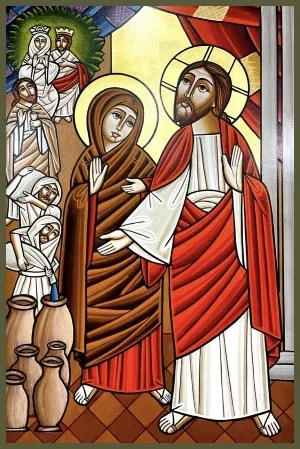
John’s theology is often regarded as deeper and more complex than that of the Synoptic Gospels, which contributes to the unique mystical quality of his Gospel. In the narrative of the wedding feast at Cana, John portrays Mary as a universal mediator of grace, highlighting her role alongside her Son in His redemptive mission through allegorical representation. In Scriptural contexts, grapes or other vine fruits symbolize God’s grace or favor toward humanity and spiritual regeneration. Conversely, the absence of grapes can represent a fall from God’s grace and a loss of true happiness, which is attainable only through a life governed by divine principles. The scenario of a vineyard stripped of grapes serves as a metaphor for the absence of grace and holiness in the lives of individuals who have turned away from God and embraced false idols, ultimately reaching a state of spiritual impoverishment.
When Israel remained faithful to its covenant with God, the fruit of the vine signified prosperity, safety, and divine favor. Various scriptures highlight this symbolism. Deuteronomy 8:7-8 characterizes the Promised Land as flourishing with vines, fig trees, and pomegranates, indicating that the vine symbolizes God’s abundant provision; Genesis 49:11 conveys Jacob’s blessing for Judah, illustrating abundance through imagery of laundering garments in wine and robes dipped in the “blood of grapes,” mirroring a land filled with blessings. Psalm 128:3 compares a blessed family to a “fruitful vine,” highlighting the link between family prosperity and divine approval; Psalm 104:14-15 refers to wine as a gift from God, described as a source that “gladdens the heart of man,” further reinforcing its favorable implications; Amos 9:13-14 looks forward to the eventual restoration of Israel, envisioning a scene where “the mountains will drip with sweet wine,” symbolizing the return of God’s favor toward His people. Altogether, these references demonstrate how the fruit of the vine is closely associated with themes of grace, blessing, and divine provision throughout the Old Testament narrative.
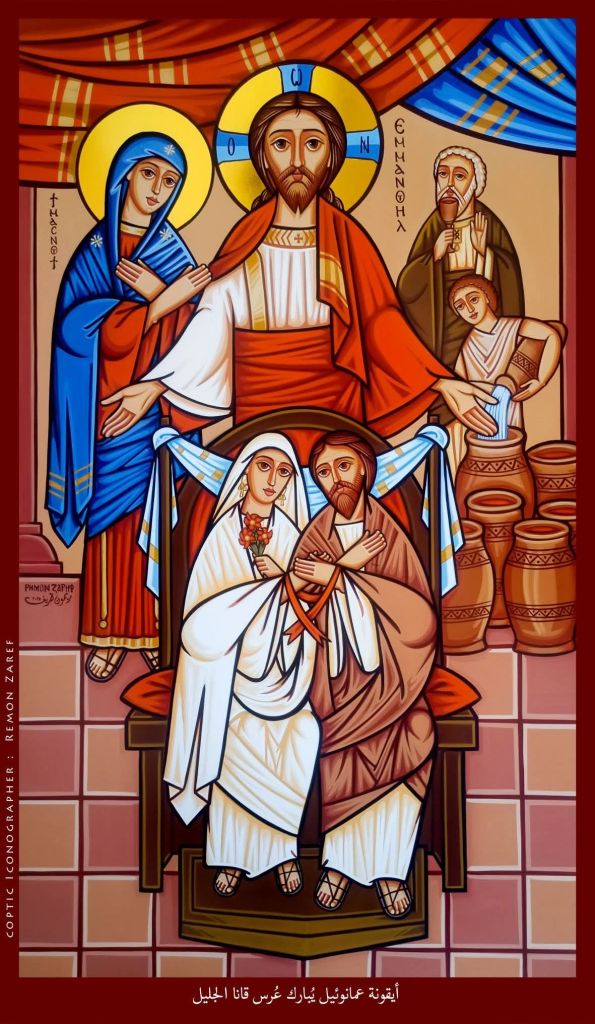
The lack of grapes, the decay of vines, or the growth of “wild grapes” represents the removal of God’s grace or protection, the breakdown of the covenant, and divine judgment. In Isaiah 5:1-7 (The Song of the Vineyard), God cultivated a choice vineyard (Israel), but it produced “wild grapes” instead of good ones. This indicates Israel’s unfaithfulness and the withdrawal of divine support, resulting in the vineyard being trampled (Isaiah 5:1-7). God refers to Israel as a “degenerate and foreign vine” that turned away from Him, forfeiting its intended purpose (Jeremiah 2:2). Ezekiel 15:1-6 compares Jerusalem to a worthless vine. Since it failed to bear fruit, the wood is only suitable for burning, symbolizing the city’s destruction. Deuteronomy 28:39 cautions that as a consequence of breaking the covenant, “You will plant vineyards and tend to them, but you will neither consume the wine nor gather the harvest, because worms will consume them.” Joel 1:7, 12 illustrates the lack of blessing as God devastates the vines and strips the fig trees, leaving them completely bare. Hosea 10 portrays Israel as an “empty vine” (or a luxuriant vine) that bears fruit solely for its own benefit, symbolizing idolatry and self-indulgence rather than dependence on God.
Prophetic literature frequently utilizes the imagery of a “cup” of wine to convey themes of God’s grace or judgment. For instance, in Psalm 75:8 and Jeremiah 25:15-18, the phrase “wine cup of this fury” is presented as a symbol of divine judgment, indicating the withdrawal of God’s mercy from nations. Additionally, in Lamentations 1:15, a vivid portrayal of judgment shows God treading upon the “virgin daughter of Judah” as in a winepress, emphasizing the intensity of His judgment.
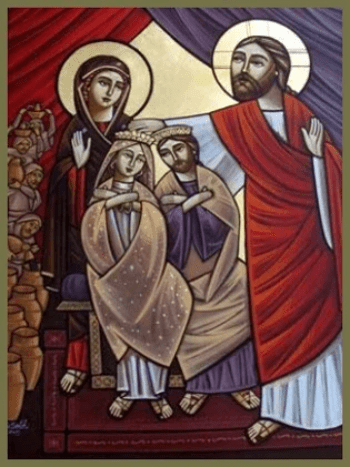
You have heard of the stewardship of God’s grace
that was given to me for your benefit.
Ephesians 2, 3
In the Gospel narrative, an interesting exchange occurs between Jesus and his mother, Mary, in which Jesus says, “What is that to us, woman?” in response to her observation that the wine had run out early at the wedding feast. This phrase may initially appear dismissive of Mary’s concerns in some less accurate modern translations. However, a deeper examination reveals that both Mary and Jesus are united in their commitment to the salvation of Israel and the Gentiles. The Greek idiomatic phrase the author uses for Jesus is “te emoi kai soi,” which translates to “what to thee and to me.” This expression reflects a concern that the two of them shall share. The term “woman,” translated from the Greek word “gynai,” is a respectful and polite form of address. Yet Jesus’ use of this title carries theological significance, suggesting a meaning that transcends mere politeness. This interaction highlights the complex dynamics of their relationship and the Gospel’s overarching soteriological themes.
In this context, Jesus is implicitly posing a rhetorical question to his mother, indicating that her concerns about the wine are not trivial. His inquiry, which can be interpreted as “What concern is this matter of the wine to us?” reflects a deeper understanding of the significance of the wine in relation to Jewish eschatology. Mary’s concern ought to transcend practical matters and have spiritual significance. Thus, what concerns Jesus must concern his mother, Mary, as well, demonstrating an interconnectedness between their roles.
In this event, Jesus draws his mother into the commencement of his public ministry, which aims to provide spiritual benefits and salvation to Israel and all of humanity. It is noteworthy that Jesus sought his mother’s support for this mission, establishing her as his “helpmate” and intercessory co-worker in the redemption. The miracle that followed was inevitable, marking the appointed hour for Jesus and serving as a sign of what was to come, particularly regarding the Cross. It was his intention all along to redefine Mary’s motherhood at the start of his public ministry. While Jesus had no further words to add at that moment, Mary, assuming the role of head steward on behalf of the bridegroom and host, directed the servants with the important instruction: “Do whatever he tells you.”
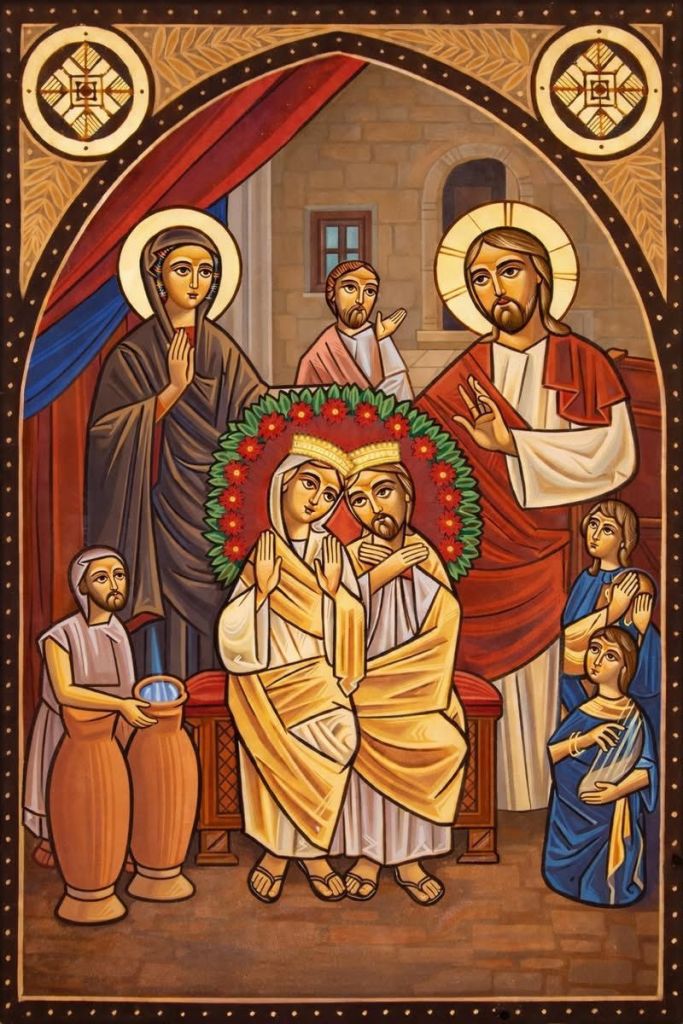
Thus, in John 2:3-5, we see a clear depiction of Mary, the mother of Jesus, as an integral associate of her Son in the order of redemption. When the hosts at Cana run out of wine, Mary identifies the problem and brings it to Jesus’ attention, saying, “They have no more wine.” This action illustrates her active role in recognizing human need and interceding on behalf of others. Mary’s response to Jesus when he tells her, “Woman, how does the wine concern us? My hour has not yet come,” indicates her deep trust in whatever he may intend to do. Despite Jesus’ apparent reluctance, Mary instructs the servants to “do whatever he tells you.” This reflects her confidence in Jesus’ ability to address the situation, showcasing her faith in him and her role in initiating his first miracle. By presenting the need at the wedding, Mary not only acted as an intermediary but also demonstrated the qualities of a true disciple—faith and obedience. Her involvement signifies her closeness to her son’s redemptive work, establishing her not just as a passive observer but as an active participant in the unfolding of Christ’s mission. Through her initiative, she helps facilitate the first miracle, symbolizing how believers can partner with Jesus in the work of redemption and compassion.
Wine, in this context, is not merely a beverage; it stands as a potent symbol of joy, abundance, and the blood of the new and everlasting Covenant established by Jesus. This symbolic connection is particularly resonant in the Gospel of Matthew 26:27-28, where Jesus, during the Last Supper, shares wine with His apostles and identifies it as His blood, poured out for the many for the forgiveness of sins. This meal occurs on the eve of His passion and death, coinciding with the Jewish Passover, a time steeped in themes of liberation and sacrifice. Thus, the presence of wine at the wedding in Cana carries deep significance, mirroring the transformative nature of Christ’s mission and the new life that flows from His sacrificial love.
Moreover, the wedding feast at Cana holds significant symbolic meaning, representing the eschatological union of the Divine Bridegroom and His Bride, the Church. This union is fulfilled through the sacrificial shedding of Christ’s blood, as depicted in Revelation 19:6-9. Mary, the mother of Jesus, plays an essential role as a mediator of divine grace for humanity. Her acceptance of this divine calling at the Annunciation, as documented in Luke 1:38, marked the beginning of her pivotal influence. Additionally, her encouragement of Jesus to begin His public ministry highlights her ongoing intercession, a journey that ultimately culminates in His sacrificial death. This act is crucial to the atonement for humanity’s sins and to the redemption of the world.
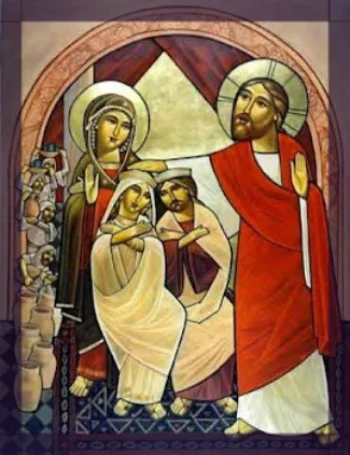
Every man has received grace,
ministering the same to one another:
as good stewards of the manifold grace of God.
1 Peter 4,1
In Christian theology, the role of the Virgin Mary is significant within the Mystical Body of Christ. Jesus has conferred a distinctive honor upon his mother, allowing her to be recognized as a chief participant in his mediation for humanity’s salvation (1 Cor 12:20-23). This perspective is reinforced by the belief that Jesus did not intend to act independently in the Divine work of salvation; rather, he chose Mary to collaborate with him in the mission of redeeming souls through the grace that he offers. All faithful disciples of Christ, referred to as “stewards of grace,” are called to participate in this mission according to the spiritual gifts they receive from the Holy Spirit. The Divine Maternity is considered the greatest gift for any follower of Christ, as it directly pertains to the hypostatic union of Christ’s incarnation.
If Mary did not play a central salvific role in her Son’s first and most significant miracle—one with profound eschatological significance and initiated by her request—John would not have included her involvement in the narrative leading to its climax. He could have simply stated: “On the third day, a wedding took place at Cana in Galilee. Jesus was there, along with his mother, Mary, and his disciples, who had also been invited to the wedding (vv. 1-2). …Jesus noticed (not his mother) that the wine had run out. Nearby stood six stone water jars… Jesus said to the servants (without Mary having first instructed them to obey her Son), ‘Fill the jars with water…’” (vv. 6-11). Instead, we find Mary, as a key actor, mediating on behalf of the wedding guests (vv. 3-5).
If Mary’s presence were not seen as deeply meaningful in terms of her moral contribution to the Divine dispensation of grace, it stands to reason that the author would not have emphasized her role in the pivotal events leading to the miracle and the commencement of her Son’s public ministry, which would ultimately unfold in the shadow of the Cross. Nor would she have been mentioned as present first, followed by Jesus and his disciples, to draw our attention to her. Mary’s active participation not only highlights her significance within the narrative but also reflects the nascent church’s understanding of her role as a co-participant in the redemption of humanity, showcasing her collaboration with the Son in the divine plan of salvation. Indeed, her involvement is not merely incidental but integral to the theological framework that supports John’s account of the wedding feast.
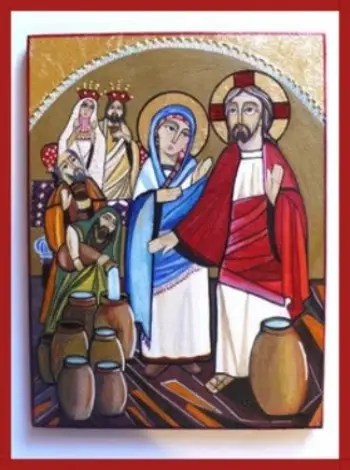
Shall not Zion say:
This man and that man is born in her?
and the Highest himself hath founded her.
Psalm 87, 5
During a traditional week-long family wedding ceremony, the wine typically runs out during the fifth stage, known as the chuppah, or “canopy.” This ceremonial element consists of a decorated cloth held above the couple, symbolizing their new home together. The chuppah is often placed outdoors, under the open sky, reflecting the biblical blessing given to Abraham that his descendants would be “as the stars of the heavens.” As part of the ceremony, the groom is escorted to the chuppah by his parents while wearing a crown and a white robe, known as a kittel. This attire signifies a fresh start for both the bride and groom, as they come together to form a new entity, free from past sins. The bride, accompanied by her parents, walks to the chuppah as a cantor performs selections from the Song of Songs, a metaphor for the union between Christ and the Church in Christianity. Additionally, during this moment, the groom offers a prayer for his unmarried friends to find their true partners in life.
The bride is celebrated with a joyful procession to the chuppah, where she circles the groom seven times, accompanied by her mother and future mother-in-law. Meanwhile, the groom prays. To symbolize the two families’ unification, the groom’s mother joins the bride and her parents in a dance. The bride typically wears a crown and a gown made of pure white linen, drawing parallels to the imagery of Christ’s bride in the Book of Revelation. Once under the chuppah, a respected Rabbi or family member offers a blessing over a cup of wine. This blessing expresses gratitude to God for the laws that uphold the sanctity of family life and the Jewish community. Following the blessing, the bride and groom partake of the wine, which symbolizes life.
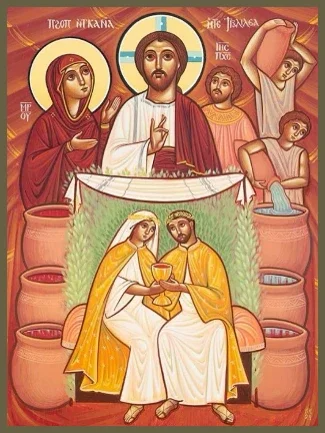
In the context of a traditional Jewish wedding, the Gospel of John presents a profound depiction of Mary as she interacts with the family of her son’s bride, symbolizing the Church. This significant moment occurs during a celebration in which the bride prepares to leave behind her past transgressions and embark on a transformative new journey by uniting with the groom, an act that signifies spiritual rebirth and renewal. The wine served during this celebration carries layers of meaning; it not only represents the joy and vitality of life but also signifies the transformed essence of Jesus’ blood, which is identified as the source of eternal life in communion with God. To fully appreciate the depth and meaning of this Gospel narrative, it is essential to interpret it through the Evangelist’s Jewish perspective, recognizing its roots in Jewish culture and traditions. This understanding illuminates the story’s rich symbolism and the importance of covenant, community, and divine relationships inherent in the Jewish faith.
In Jewish eschatology, there is an expectation that the Messiah will once again bring manna from heaven and oversee the sacrificial rituals involving the Bread of the Presence and miraculous sacrificial wine. The expectation of the Messiah bringing manna from heaven and overseeing sacrificial rituals can be traced through various Old Testament texts and traditional Jewish writings. The concept of manna is primarily found in the Book of Exodus (16), where God provides it to the Israelites in the desert. This event is often seen as a sign of God’s provision and care. The prophetic writings, particularly in Isaiah (Isaiah 41:17-20; Isaiah 49:10), also contain references to divine provision, which some interpret as messianic. The Bread of the Presence is mentioned in Leviticus 24:5-9, where it describes how this sacred bread is to be placed in the Tabernacle.
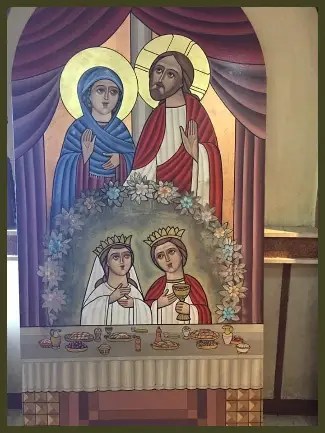
The Messianic interpretations of these rituals can be found in traditional writings, such as the Talmud and Midrash, which discuss the future restoration of the Temple and all its associated rituals. The expectation of sacrificial wine involves the Temple sacrifices that will be reinstituted in the Messianic age. Traditional texts, including the writings of the prophets and Rabbinic literature, reflect on the return of these rituals during the coming of the Messiah, often linking them to ideas of redemption and restored communion with God. These themes are prevalent in Jewish theological discussions and are regarded as part of the broader hope for the future in traditional Judaism, particularly in the context of the Messiah’s coming.
Hence, Mary’s involvement in the events surrounding the wedding at Cana highlights her significant role in the early Christian community and her unique collaboration with Jesus in the process of redemption, particularly through her identity as His mother. The Gospel of John simply refers to her as “the mother of Jesus,” emphasizing the respect accorded to her maternal role within the context of grace. During the wedding ceremony, the groom’s mother would traditionally dance with the bride and her family to symbolize the joining of their families. In this context, Mary assumes a mediatory role, serving as a link between Christ (the Bridegroom) and His Church (the Bride). Through her, the faithful are formally united with Jesus at the wedding banquet in the kingdom of heaven (Revelation 19:6-9).
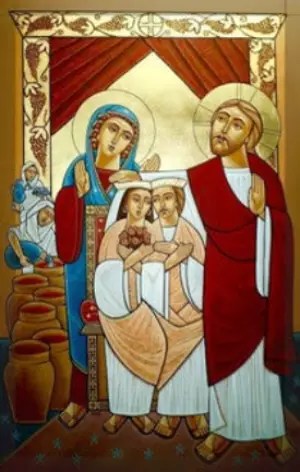
And the wine failing, the mother of Jesus saith to him:
They have no wine. And Jesus saith to her: Woman, what is
that to me and to thee? My hour is not yet come. His mother saith
to the waiters: Whatsoever he shall say to you, do ye.
John 2, 3-5
Catholic biblical scholar Edward Sri (Walking with Mary: Crown Publishing, 2017) emphasizes that the Gospel writer John intentionally chooses the term diakonois, rather than the more common Greek word duolois for “servants.” The word diakonois is associated with true discipleship throughout the New Testament. For instance, in John 12:26, Jesus states, “If anyone serves (diakonei) me, he must follow me; and where I am, there shall my servant (diakonoi) be also.” This choice of terminology indicates that John presents Mary not only as the mother of Jesus but also as the mother of all His disciples, who comprise the Church (the Bride of Christ). In this maternal role, her primary message to all believers is clear: “Do whatever he tells you.”
Mary plays a significant role as the mother of Jesus Christ, largely because of her willingness to assume this extraordinary responsibility. Her faith, demonstrated through her love, enabled the incarnation of the divine Word, which is fundamental for humanity’s redemption and the dissemination of divine grace. This grace is essential for personal regeneration and justification before God. As the one who brought the source of all grace into the world, Mary continues to serve as an essential mediator. She is often referred to as the “neck” that connects Christ (the Head) to the members of His Mystical Body, as John Damascene (De Nativitate Virginis) highlights. In this capacity, she plays a vital role in distributing divine graces originating from her Son.
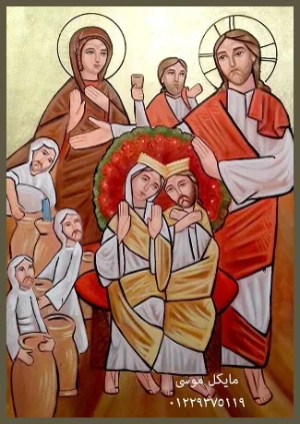
In the accounts of Jesus’ miracles, it is notable that none were performed at the apostles’ request, even during significant events such as the marriage feast at Cana. Instead, it was Mary, His mother, who approached Jesus expecting a miracle. Unlike the apostles, who once suggested sending the hungry crowds away (Matthew 14:15-21), Mary did not advocate ending the wedding festivities. Recognizing the need, she instructed the servants to follow whatever Jesus would command. Importantly, Mary did not directly address the bridegroom regarding the wine shortage, even though it was his duty to ensure an adequate supply for the week-long celebration. Her statement, “They have no wine,” reflects her faith and confidence in Jesus as the awaited Bridegroom, prophesied to bring forth the wine of salvation for the redemption of Israel and humanity. The “best wine” that Jesus provided, flowing abundantly, echoes the promises made by the Hebrew prophets.
In Jewish belief and biblical prophecy, wine serves as a profound symbol of divine blessing, joy, and the messianic age promised by the Messiah, as well as of Christian atonement and redemption. Old Testament prophecies depict the Messiah bringing a period of unparalleled abundance, in which wine symbolizes the fulfillment of God’s promises to Israel. Prophets often linked the arrival of the Messiah to a future, earthly era characterized by excessive fertility and agricultural abundance. For instance, Amos 9:13–14 speaks of a time when “the mountains shall drip sweet wine, and all the hills shall flow with it.” This is interpreted as a period of extreme, miraculous prosperity. Similar to Amos, Joel 3:18 describes a day when “the mountains shall drip sweet wine,” symbolizing a return to the Garden of Eden and the restoration of God’s favor. And Jeremiah 31:12 describes the redeemed people of Israel as “radiant over the goodness of the LORD—over the grain, the new wine, and the olive oil.”
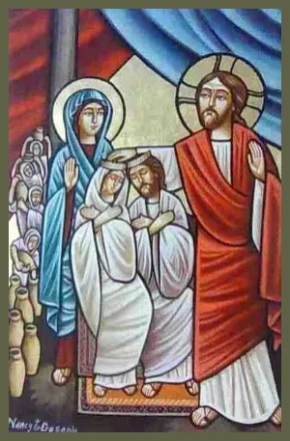
May he send you help from the sanctuary,
and give you support from Zion.
Psalm 20, 2
The imagery of wine is sometimes directly linked to the royal, conquering figure of the Messiah King, particularly in his role as the descendant of Judah. In Jacob’s blessing of Judah, it is said that he will bind his foal to the vine, and “wash his garments in wine, and his clothes in the blood of grapes.” Traditional Jewish interpretation links this to the Messiah (Shiloh), who will rule with such abundance that wine is as common as water (Genesis 49:11). In Jewish tradition, the final redemption will be celebrated with a great banquet prepared by God, often depicted as a “feast of well-aged wine” for all people, Jews and Gentiles: “On this mountain the LORD of hosts will make for all peoples a feast of rich food, a feast of well-aged wine.” This banquet signifies the end of sorrow and death” (Isaiah 25:6).
While not always identifying the Messiah personally as the one holding the cup, the “cup of salvation” is a key phrase in Hebrew scripture representing deliverance. It appears in Psalm 116:13: “I will lift up the cup of salvation and call on the name of the LORD.” This is often understood in Jewish tradition as a gesture of gratitude for salvation and a declaration of loyalty to God. The third cup of the Jewish Passover Seder, known as the Cup of Salvation, Redemption, or Blessing, is the cup Jesus used to institute the Lord’s Supper in the Gospel narratives. Consumed after the main meal, the sacrificed lamb and the cup symbolize redemption and, for Christians, represent the blood of the New Covenant shed for the forgiveness of sins (Matthew 26:26-29; 1 Corinthians 10:16).
In the Gospel of John, the author draws a connection between Mary and Eve, portraying Mary as the spiritual “mother of all the living” in her relationship with Jesus, the New Adam, as his “helpmate” (cf. Genesis 2:18). The Hebrew word for “helpmate” or “helper” is ezer, which can also mean “rescuer” or “strength.” This suggests that Eve was not merely a subordinate assistant but a powerful and equal partner with Adam. This thematic representation is evident in the Gospel’s structure, which begins with a narrative reminiscent of the creation story in Genesis 1. The Evangelist employs a day-by-day framework that mirrors the original creation, ultimately leading to the initiation of Jesus’ public ministry, which is intricately linked to the theme of redemption. Significantly, John’s Gospel presents a ‘New Creation’ narrative, highlighting the collaboration between the new Adam and his counterpart, the new Eve, as they work together to restore the fruit of life and overcome the consequences of the Fall (see John 1:1, 29; 35-36, 43-44; 2:1-2 ).
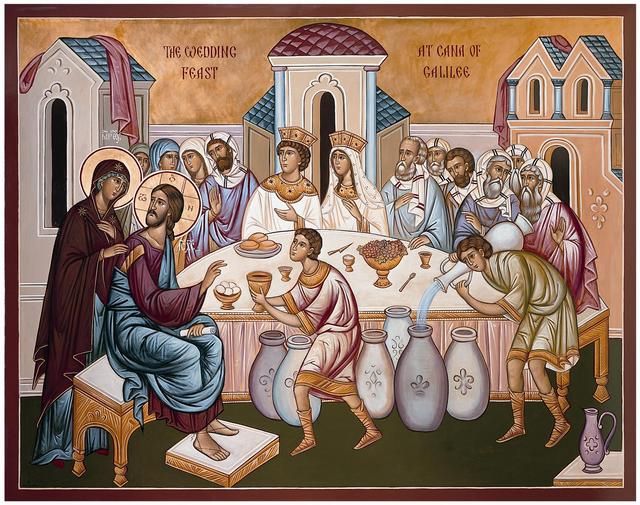
And I heard as it were the voice of a great multitude, and as the voice of many waters, and as the
voice of great thunders, saying, alleluia: for the Lord our God the Almighty hath reigned. Let us
be glad and rejoice, and give glory to him; for the marriage of the Lamb is come, and his wife hath
prepared herself. And it is granted to her that she should clothe herself with fine linen, glittering
and white. For the fine linen are the justifications of saints. And he said to me: Write: Blessed
are they that are called to the marriage supper of the Lamb. And he saith to me: These words of
God are true.
Revelation 19, 6-9
The passage from the Book of Revelation 19:6-9 is vivid and rich in imagery, portraying a scene of heavenly celebration and divine triumph. The text emphasizes God’s ultimate victory over evil, heralded by a great multitude proclaiming “Hallelujah!” This jubilant chorus reflects the fulfillment of God’s promises and the establishment of His reign. The Lamb’s marriage is announced, symbolizing the intimate and eternal relationship between Christ and His followers, and is often interpreted as the culmination of God’s redemptive plan. The invitation to partake in the marriage supper further underscores the joy and blessings awaiting the faithful, marking a pivotal moment in Christian eschatology that encapsulates hope and divine justice.
The opening lines depict a “great multitude” along with voices characterized as “many waters” and “great thunders.” This striking imagery conveys a powerful, harmonious worship, suggesting a moment of immense significance in which the congregation comes together to celebrate God’s reign. The rich use of such imagery highlights the grandeur and majesty inherent in God’s presence. The phrase “for the Lord our God the Almighty hath reigned” underscores God’s supreme authority and power. It highlights that, after various trials and tribulations, God has emerged victorious and firmly established His kingdom. This statement reinforces the belief in God’s sovereignty and dominance over all circumstances. Meanwhile, the phrase “be glad and rejoice” reflects a theme of hope and celebration within the community of believers. It signifies not only an act of worship but also acknowledges the realization of God’s promises to His people. This moment underscores the importance of recognizing and celebrating the fulfillment of these divine assurances.
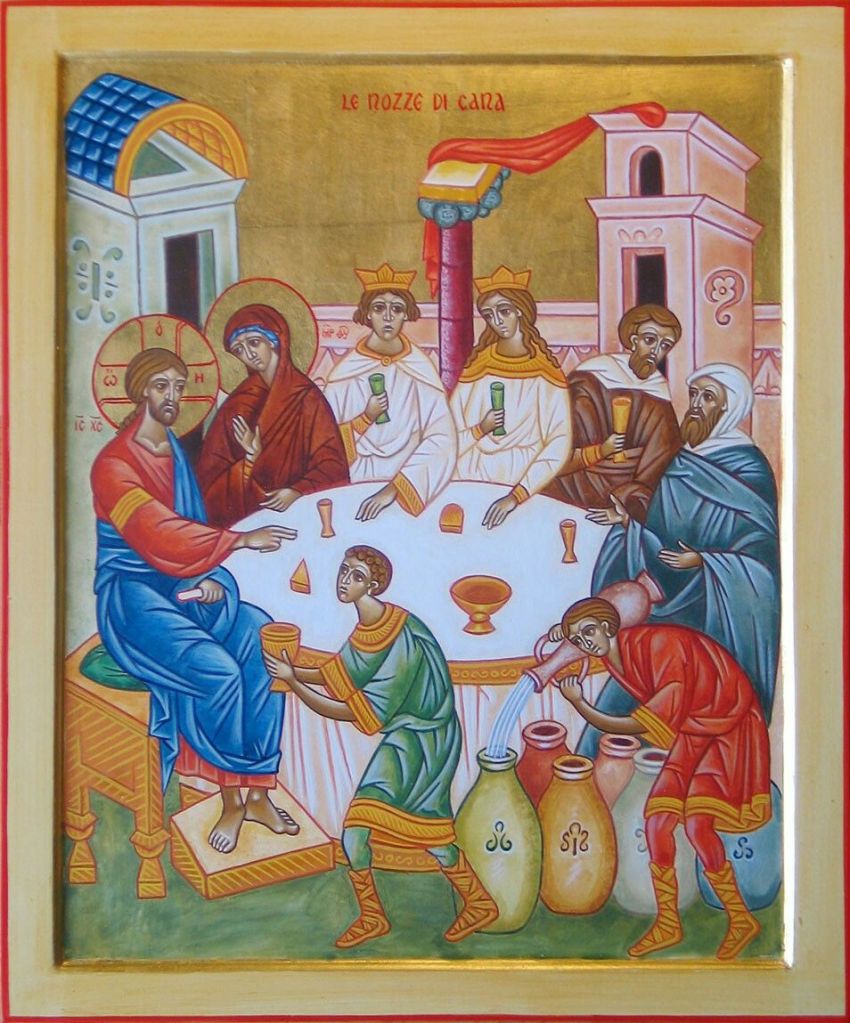
The term “marriage of the Lamb” serves as a profound metaphor for the deep, transformative relationship between Christ, symbolized as the Lamb, and the Church, often depicted as His Bride. This imagery draws from biblical narratives, particularly those found in the Book of Revelation, and emphasizes essential themes of unity, love, and unwavering commitment. The metaphor signifies a divine union that transcends mere companionship; it embodies an intimate, sacred bond marked by mutual devotion and spiritual completeness. In this union, the Church is celebrated not just as a collective body of believers, but as a cherished partner, reflecting the depth of Christ’s sacrificial love and His desire for a harmonious relationship with humanity. This relationship is further underscored by the idea of covenant, in which the commitment of both Christ and the Church forms a lasting, transformative connection that endures through time and into eternity.
The passage illustrates that the Bride, a potent symbol of the Church, undergoes a profound preparation to achieve holiness and righteousness. This transformative journey is made attainable through the interplay of faith and divine grace, which empower the faithful to transcend their shortcomings. The vivid imagery of “fine linen, glittering and white” powerfully represents purity and righteousness, underscoring the essential nature of spiritual readiness. This emphasis on the need for both inner transformation and outward manifestation underscores the integral role that dedication and commitment play in the believer’s pursuit of a sanctified life. Ultimately, it reflects the Church’s call to embody these virtues in anticipation of its ultimate union with the divine.
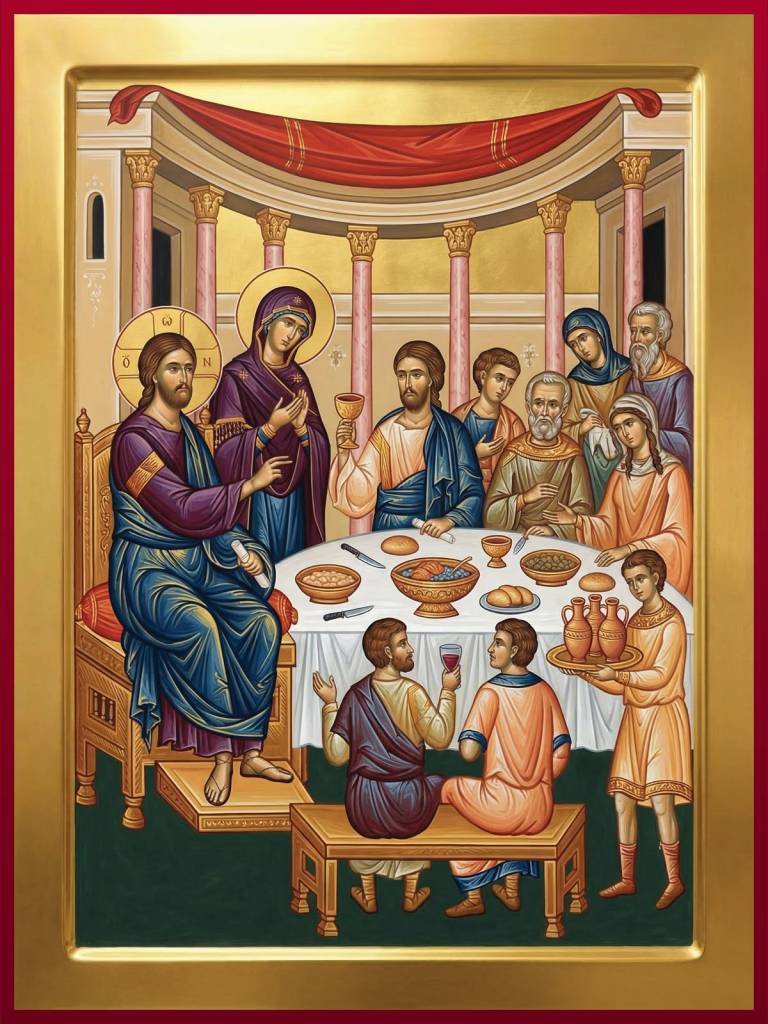
The text “for the fine linen are the justifications of saints” from Revelation 19:8 is interpreted in Catholic teaching as emphasizing the saints’ righteousness and holiness. In this passage, fine linen symbolizes the purity and virtue of the faithful, representing their moral and spiritual readiness for the Lamb’s wedding feast, a metaphor for eternal life with Christ. The Catholic Church sees this as a reflection of the transformative grace that believers receive through faith and the sacraments. The “justifications of saints” indicate that it is through God’s grace, made accessible through Jesus’ sacrifice, that individuals are made righteous and are thus able to stand before God. Moreover, this passage highlights the importance of living in accordance with God’s commandments and the Church’s teachings, and calls all believers to aspire to holiness in preparation for their ultimate union with Christ in heaven. It reassures the faithful that their efforts to live a virtuous life, inspired by God’s grace, will be recognized and rewarded in the heavenly kingdom.
The declaration “Blessed are they that are called to the marriage supper of the Lamb” symbolizes the profound joy and privilege bestowed upon those invited to this divine, celebratory feast. This proclamation highlights the significance of being among the chosen few for salvation, representing a deep communion with God. The marriage supper is often interpreted as a metaphor for the ultimate union between Christ and the Church, where the faithful are welcomed into eternal life and fellowship. This moment is not merely a gathering; it signifies the culmination of spiritual fulfillment, in which grace and redemption are fully realized. To be called to this supper is to experience the fullness of God’s love and the promise of salvation, reinforcing the importance of faith, hope, and community within the Christian tradition.
The final affirmation, “These words of God are true,” serves as a powerful reminder of God’s unwavering reliability and supreme authority in His messages throughout the scriptures. This statement reassures believers not only of the truthfulness of the prophetic visions articulated in the Book of Revelation but also reinforces the profound hope and assurance these visions inspire. Affirming that God’s words are immutable strengthens the community’s faith, encouraging them to trust in the promises of divine intervention and the eventual fulfillment of God’s plan for humanity. This declaration invites believers to reflect deeply on the significance of these revelations and to find solace in the knowledge that they are anchored in eternal truth.
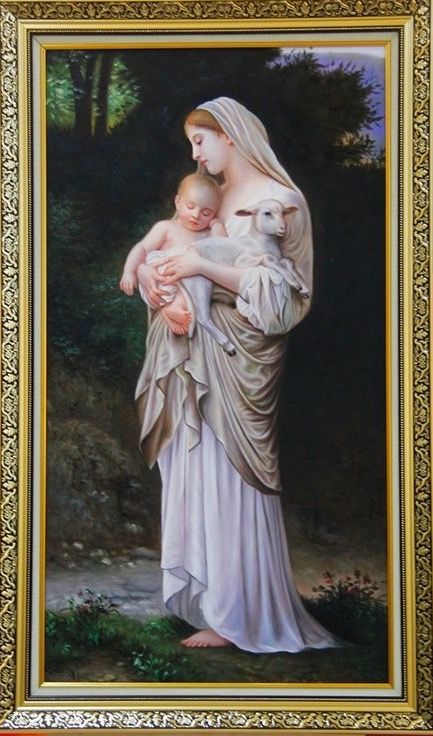
In John’s account of the new creation, the narrative reaches a significant point during the wedding feast at Cana. This event takes place on the seventh day, symbolizing not a day of rest for Jesus, but the beginning of His salvific mission. This story can be interpreted as a second creation narrative, with Jesus representing the New Adam and Mary serving as the New Eve. The account is rich in literary and theological symbolism. The first miracle Jesus performed, at His mother’s request, was turning water into wine. This act parallels Moses’ initial miracle, where he turned water into blood. In the Cana narrative, the water is converted into wine, which is described as the “blood of the grape” in Genesis 49. This imagery implies that Jesus foreshadows the conversion of wine into His blood at the Last Supper, understood as the sacrificial New Passover meal leading to the heavenly wedding banquet.
On the second day of the new creation, John the Baptist encountered Jesus and declared, “Behold the Lamb of God, behold him who takes away the world’s sin” (John 1:29). In John 2, this Lamb of God participates in a wedding feast accompanied by his mother and disciples. This wedding feast represents the eschatological Lamb’s wedding banquet, a concept John elaborates on in Revelation. The events that unfold at the wedding in Cana find their ultimate fulfillment in the New Jerusalem, which descends from heaven (Revelation 21:1-5). This intangible reality is made tangible through the sacrament of the Holy Eucharist, which is celebrated during Holy Mass. The Mass serves as a re-presentation of the Cross and has been part of the Catholic Church’s practices since the time of the Apostles (1 Corinthians 10:16).
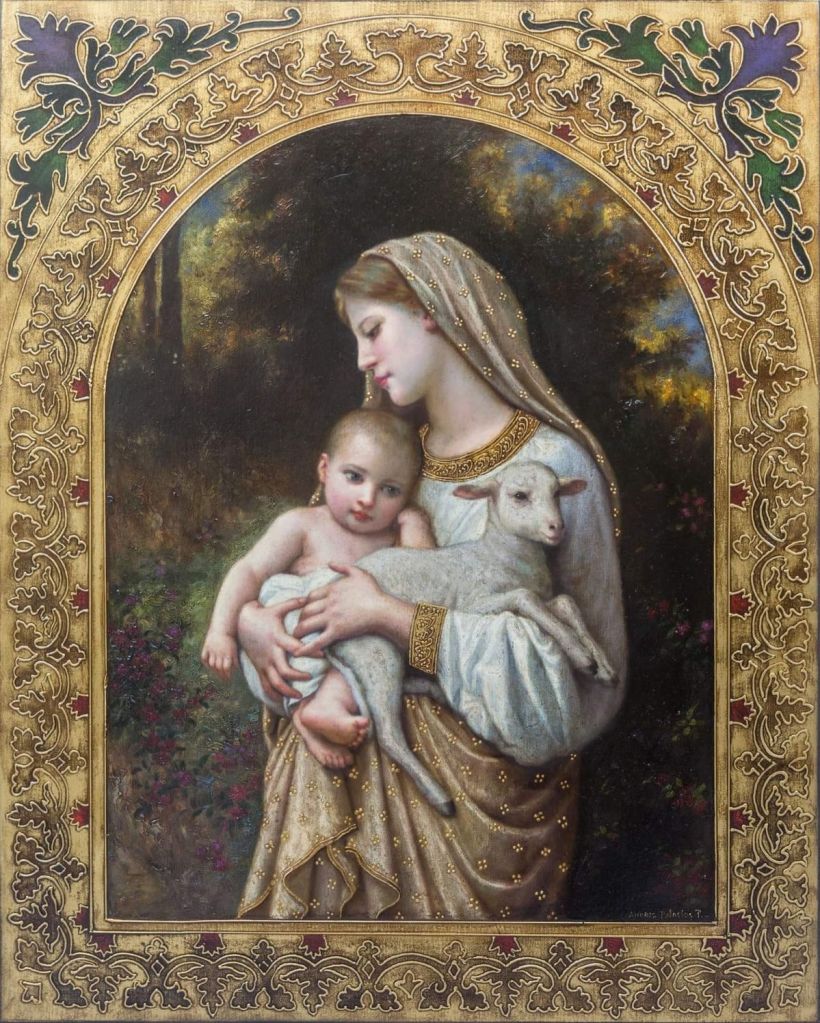
The Gospel writer emphasizes a profound divine mystery that goes beyond what is immediately apparent in Cana. He highlights Mary’s role and crafts her interaction with Jesus to showcase their significant connection to the sacred work of salvation. Mary’s presence at the wedding feast, alongside her Son, as his “mother,” is intentionally designed. In the Scriptures, every detail holds purpose; nothing is incidental. By the time this Gospel was composed, a rich Marian tradition had already developed within the early Church. Through the intercession of Mary, who is recognized as the faithful Mother, the blessings of her Son are made accessible to believers. At the wedding feast of the Lamb, Mary, as the mother of the Son, symbolically presents Him as the groom to the Church, which acts as the bride and serves as a sacrament of divine grace available to all humanity (Revelation 21:1-2, 9-22).
In the time of Jesus and his mother Mary, Jewish beliefs held that an eschatological wedding banquet would symbolize the fulfillment of the spiritual marriage covenant between YHWH (God) and Israel, ultimately including all nations. This banquet was envisioned as a return to the Garden of Eden, representing a time before the fall of Adam and Eve. It was believed that the righteous would partake in miraculous wine and experience the Beatific Vision of God during this event. When Mary remarked, “They have no wine,” she expressed the Jewish hope that the Bridegroom, YHWH, would provide wine at His banquet, symbolizing the wine of salvation. Her statement indicated that the finest wine, which was traditionally saved for last, was represented in the transformed form of her divine Son’s blood, as alluded to in John 2:10.

Mary, much like John the Baptist, recognized that her son was the Lamb of God, destined to take away the world’s sins through his selfless act of sacrifice. By making her request, she subtly fulfilled her hope that he would provide the prophetic, sacrificial wine of salvation that the Jewish people had long awaited. Traditionally, the Jews anticipated that YHWH would send a Messiah to lead the offering of unbloody sacrifices of bread and wine for the forgiveness of sins on Mount Zion. However, they did not foresee that this celebration would ultimately manifest as the holy sacrifice of the Mass within the Catholic Church, referred to as the New Jerusalem—a visible representation of the invisible heavenly marriage banquet at the end of this age. In this sacrificial context, the bread and wine, offered by Christ as our High Priest in the order of Melchizedek, become the actual substance of His body and blood.
Mary must have understood at some point of the miracle that the sacrificial victim would be the Divine Groom Himself, in the person of her Son, Jesus, by the outpouring of His blood —the wine of the new and everlasting covenant. His bride would be a redeemed humanity and His Church. The Groom’s gift to his bride would be the giving of himself in his sacrificial act of love: the regenerating water and justifying blood that poured out from his pierced side upon the consummation of their eternal marriage covenant (John 19:28-35). On this occasion, a sword would also pierce Mary’s soul (Luke 2:34-35).
The Last Supper is significant in Christian theology as it foreshadows the heavenly wedding banquet of the Lamb, representing the anticipated culmination of the union between the Divine Messiah and His New Covenant Church. Jesus indicated to His mother that His passion was still three years away, coinciding with His crucifixion, which is viewed as the consummation of this divine marriage. The pivotal moment occurred when Jesus accepted the sour wine offered to Him on a hyssop branch. This act symbolizes the taking of the fourth Hallel cup, known as the Cup of Consummation, traditionally included at the end of the Passover meal. However, this cup was notably absent at the Last Supper and held in reserve, as recorded in the Gospel of John (19:28-30).
Hence, at the wedding in Cana, the guests were replenished with wine. Still, this act marked the arrival of the Divine Bridegroom, who was expected to host the sacrificial banquet of salvation and establish a new covenant with humanity. This action fulfilled various prophecies regarding redemption. In this context, when Mary, the mother of Jesus, urged him to address the lack of wine at the wedding by stating, “They have no wine,” she was essentially requesting him to reveal his identity as the long-awaited Divine Bridegroom and to provide the metaphorical “wine of salvation,” representing his own blood for the redemption of humanity (Isaiah 24, 7, 9, 11; 25:6-8).
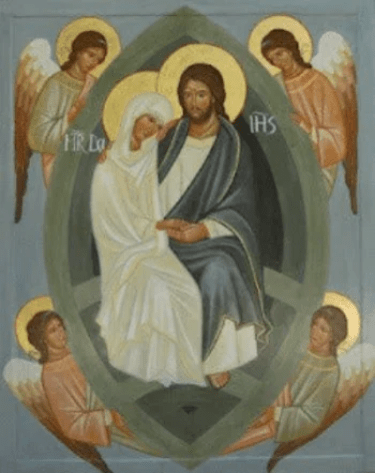
“Arise, my darling,
my beautiful one, come with me.
See! The winter is past;
the rains are over and gone.
Flowers appear on the earth,
the time for pruning the vines has come,
and the song of the dove is heard in our land.
The fig tree puts forth its figs,
and the vines, in bloom, give forth fragrance.
Arise, my beloved, my beautiful one,
and come!”
Song of Solomon 2, 10-13
Early Sacred Tradition
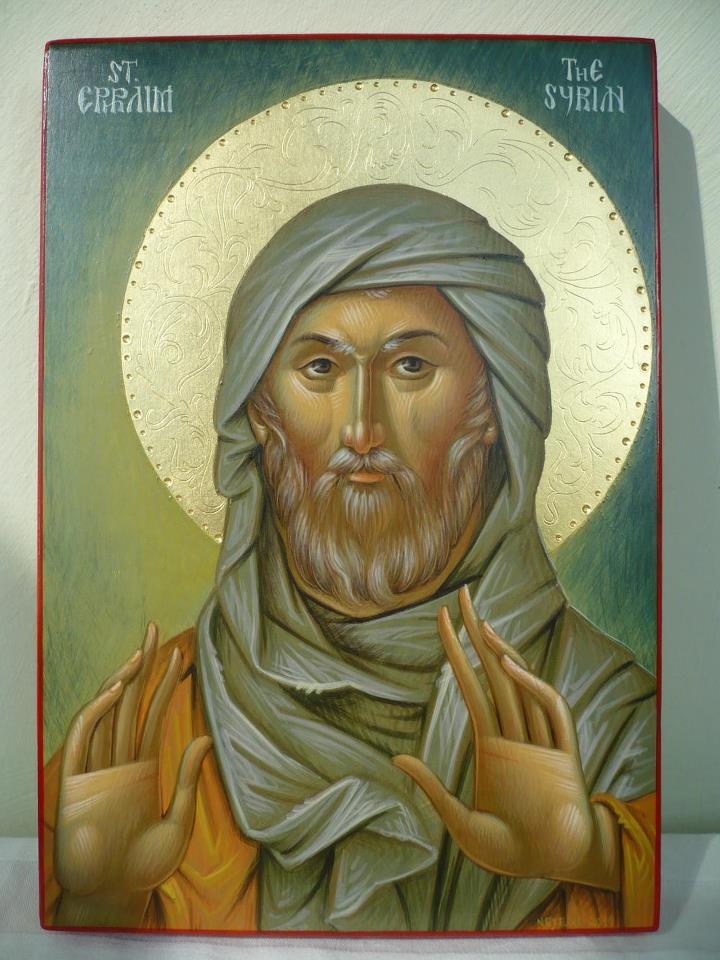
St. Ephraem of Syria (A.D. 373)
“With the Mediator, you are the Mediatrix of all the world.”
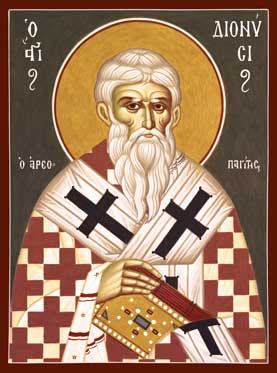
St. Theoteknos of Livias (ante A.D. 560)
“Raised to heaven, she remains for the human race an unconquerable rampart, interceding for us before her Son
and God.”
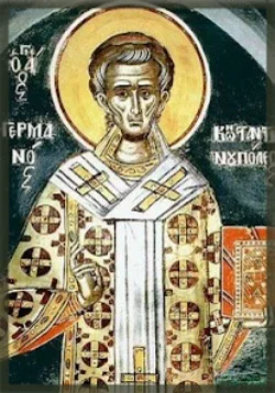
St. Germanus of Constantinople (ante A.D. 733)
“Mary the Ever-Virgin — radiant with divine light and full of grace,
mediatrix first through her supernatural birth and now because of the
intercession of her maternal assistance — be crowned with never-ending blessings …seeking balance and fittingness in all things, we should make our way honestly, as sons of light.”
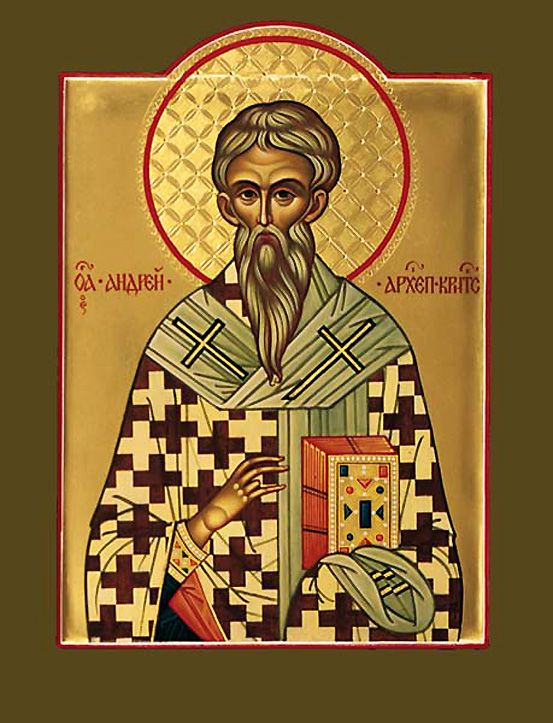
St. Andrew of Crete (ante A.D. 740)
“O, how marvelous it is! She acts as a mediatrix between the loftiness of God and the lowliness of the flesh, and becomes Mother of the Creator.”
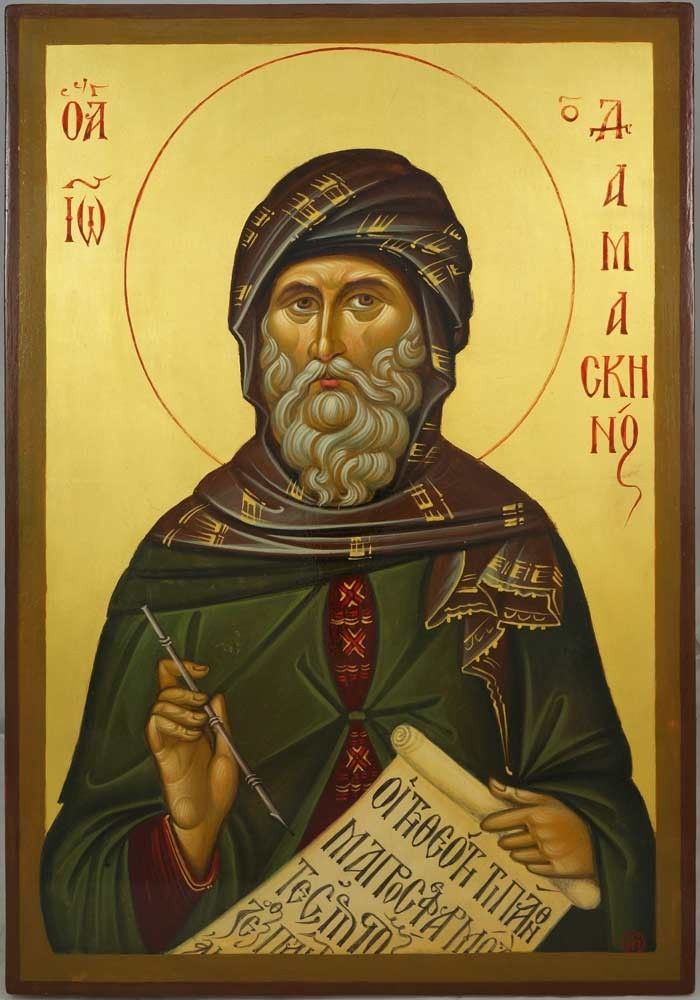
St. John Damascene (A.D. 749)
“From her we have harvested the grape of life;
from her we have harvested the seed of immortality.
For our sake, she became Mediatrix of all blessings;
in her God became man, and man became God.”

Ave Maria


Leave a Reply